

Jan. - The year 2026 began for Cuba with new policies and incentives aimed at improving foreign currency inflow, boosting exports, attracting investments, and strengthening its international integration in foreign trade.
A set of measures announced last November during the 41st Havana International Fair (Fihav 2025) are expected to foster a more dynamic business environment by including greater monetary flexibility, simplification of procedures, expedited timelines, and innovative operational modalities.
According to Cuban authorities, the sectors of greatest interest for developing foreign capital investments are food production, tourism—including health tourism; the electric energy sector, with an emphasis on developing renewable energy sources; hydrocarbon exploration and exploitation; mining; construction; as well as the improvement and expansion of industrial infrastructure.
Most of these sectors are identified among the strategic ones in the National Economic and Social Development Plan through 2030, stated Joaquín Alonso Vázquez, Minister of Economy and Planning, last December before Cuban deputies.
In all cases, the attraction of foreign investment aims to increase exports and effectively substitute imports, gain access to new technologies, and establish productive linkages with the rest of the national economy.
Another important objective is the implementation of projects in economically less developed areas in accordance with the territories' potential, supported by provincial governments.
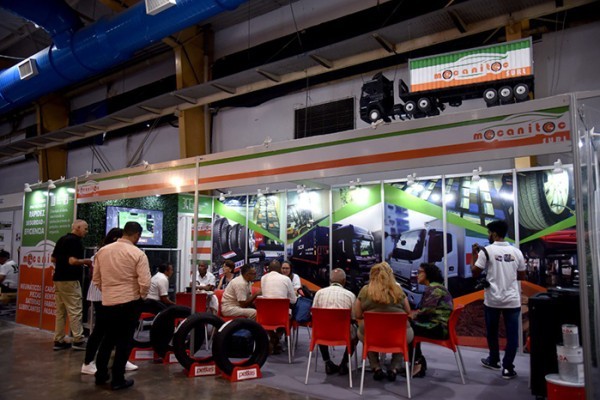
As a complement to these measures, at the 41st Havana International Fair, an updated portfolio of investment opportunities was presented, comprising 426 projects exceeding 30 billion dollars, distributed across 13 sectors and all the country's provinces.
During the 8th Investment Forum at Fihav 2025, Oscar Pérez-Oliva Fraga, Deputy Prime Minister and Minister of Foreign Trade and Foreign Investment (Mincex), mentioned among the changes and incentives a differentiated scheme that will allow foreign companies to operate, according to their needs, both in national currency and foreign currency.
Operationally, they can wholesale their products to any national economic actor with payment capacity, without restrictions.
They will also have access to purchasing fuel in foreign currency without restrictions and the possibility to import it if it is not available within the national territory.
Additionally, as part of monetary flexibility for a new investment environment, more competitive foreign currency tariffs will be established; bank accounts abroad for companies; and in terms of simplifying procedures, the feasibility study will be replaced by a business plan, the evaluation period reduced from 15 to seven days, and the implementation of “positive silence” (tacit approval).
The Minister of Foreign Trade and Investment (Mincex) emphasized that, in labor matters, the investor can directly or through an employment agency choose their workforce and pay bonuses in foreign currency to workers linked to the project via banked payments, provided the company generates external income.
On the other hand, other business models have emerged such as wholesale commercialization without restrictions and the use of underutilized productive facilities.
Pérez-Oliva Fraga reaffirmed that Cubans residing abroad have the same rights and opportunities as any foreign investor to carry out business in the country, which will be applied with all the new measures without “any kind of difference or obstacle.”
To increase and diversify external income, Cuba approved a policy aimed at encouraging exports of IT services, authorizing self-financing schemes in foreign currency for selected companies, and is in the process of updating a policy aimed at promoting exports in the knowledge sector.
When presenting the Government Program to correct distortions and revive the economy before the National Assembly of People’s Power, Manuel Marrero Cruz, Prime Minister, highlighted that, in addition to the decisions announced at the Havana International Fair, five business directives were approved for real estate projects, along with regulations to organize e-commerce with payments from abroad.
A second phase of the reorganization of state entities authorized to manage foreign trade for non-state management forms was carried out, leaving 52 companies.
According to the head of Government, by November non-state management forms and individuals had imported about 2.2 billion dollars, 26% more than in the same period of 2024.
However, total foreign currency income and exports have not reached planned levels, which has affected tourism, as it did not receive the expected number of visitors.
So that by 2026 it will be necessary to give top priority to the recovery of tourist services and other traditional export sectors, to increasing income from professional services, and to attracting a greater volume of foreign investment, remittances, and external financing.
Therefore, it is essential to generate new export sectors, add value to the current ones, and promote exports based on knowledge and high technology.
Taken from the Cuban News Agency (ACN)