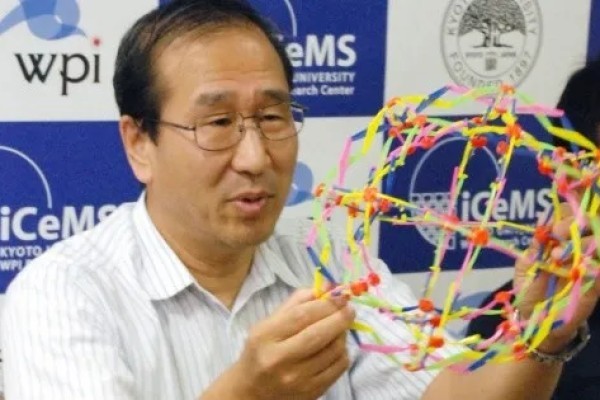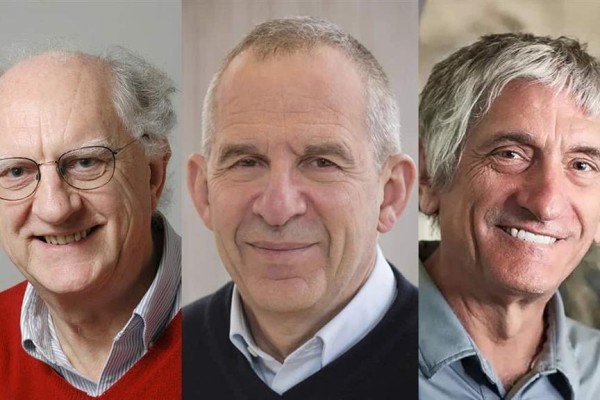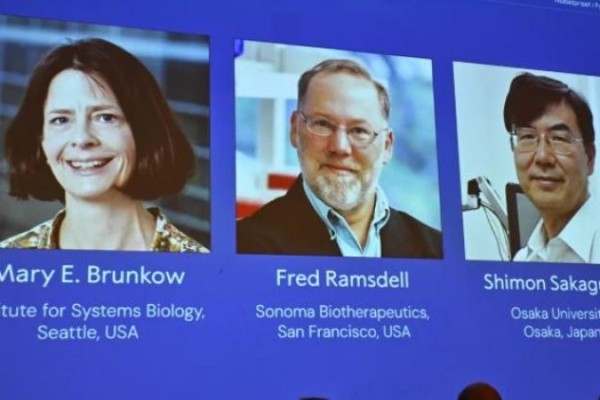
The 2025 Nobel Prize in Medicine or Physiology was awarded today to Mary E. Brunkow, Fred Ramsdell, and Shimon Sakaguchi "for their discoveries concerning peripheral immune tolerance."
The Royal Swedish Academy decided to award this prize jointly to the three researchers.
They identified the "security guards" of the human immune system, scientifically known as regulatory T cells, which prevent immune cells from attacking and harming our own bodies.
Officially, it was noted that his discoveries have spurred the development of medical treatments for cancer and autoimmune diseases and may lead to more successful transplants, with several of these treatments currently in clinical trials.
Mary E. Brunkow is with the Systems Biology Institute in Seattle, and Fred Ramsdell is with Sonoma Biotherapeutics in San Francisco, both in the United States. Shimon Sakaguchi conducts his research at Osaka University in Japan.
Every year in October, the winners of the Nobel Prizes are announced. These prizes honor personalities in Physics, Chemistry, Medicine and Physiology, Literature, Economics, and Peace.
This award was established in 1901 in honor of the Swedish scientist Alfred Nobel (1833-1896), discoverer of dynamite, and the first Nobel Prize in Physiology or Medicine was awarded to the German Emil Adolf von Behring for his work on serum therapy, especially its application against diphtheria, a study that opened a new path in the field of medical science.
The Nobel Assembly at the Karolinska Institute has selected the laureates since 1901.
The Nobel Prize in Medicine is the first in a series of these prestigious awards, with announcements for the other disciplines to follow in the following days.
From Prensa Latina