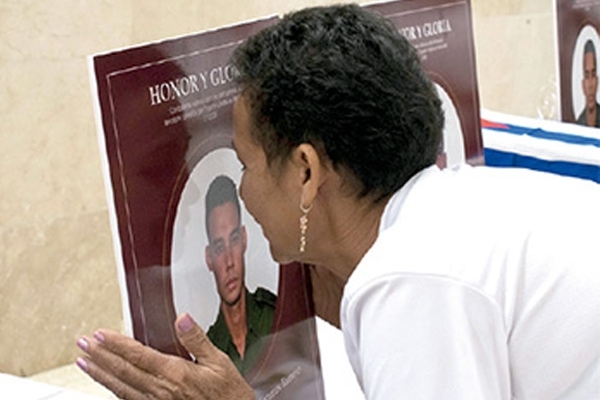
Granma.— In the quiet neighborhood where Addriel Adrián Socarrás Tamayo grew up, the echo of children's games has been replaced by a dense silence, heavy with memory.
At 32 years old, this captain of the Ministry of the Interior, a native of the municipality of Yara in this province, had his whole life ahead of him: a wife and two young children waiting for him in Matanzas, a united family supporting him, and the promise of many returns home after two years of service in Bolívar’s land.
However, on January 3rd, his life was cut short on Venezuelan soil during the complex military operation related to the kidnapping of President Nicolás Maduro.
The days following the attack were torn by heartbreaking uncertainty for the family. A call to Addriel’s mobile phone still rang through, a sound that at times sustained a fragile hope.
“We knew he was carrying out an important mission but we were unaware of the details; he was very discreet about his work and extremely dedicated,” explains Diosvel Omar González Piñeiro, one of his closest cousins.
He adds that Addriel was always a very lively, sharp, and respectful young man, curious about everything, and because of his kindness and contagious joy, the whole town loved him.
“He was one of those people who gave strong hugs. Wherever he was, his presence was felt.
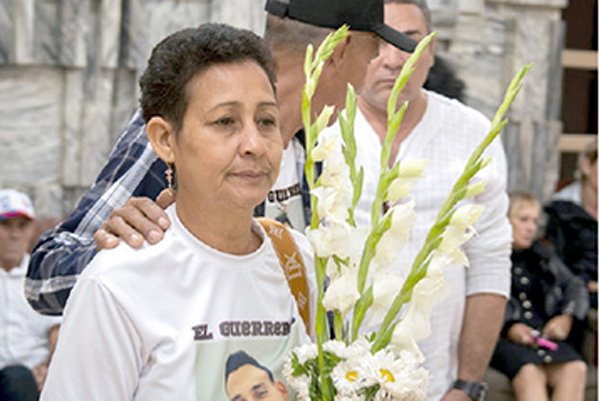
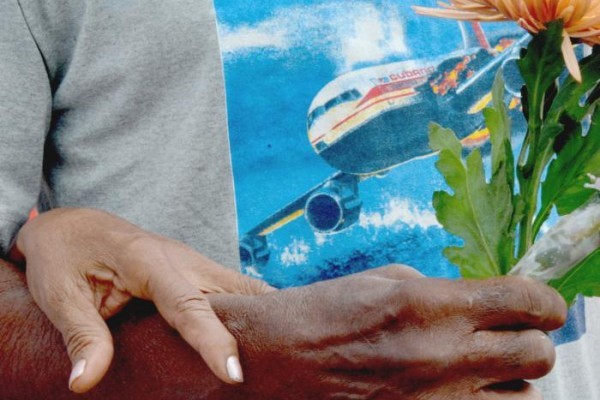
“Before his time, he was already wise and had grown as a human being. In that sense, I believe there are men who sense they will have a short life, so they mature early, so that nothing remains undone: my cousin was one of those people,” he explains proudly, pointing to the image of Addriel printed on the sweater he wears, which bears the nickname “The Warrior.”
“We decided to call him that because that’s what he was. His revolutionary convictions were radical and profound; he always acted in accordance with his beliefs and held firmly that defending the homeland was the most important thing.
“If someone presented him with an opposing argument, he respectfully proved that he was the one on the right path. And under those principles, he lived, knowing exactly what his place was.”
Regarding Sonia, the mother of this hero, Diosvel assures that her lineage is that of Mariana Grajales, since despite the pain, she remains calm under the premise that she must be strong, just as her son was until the very last moment.
“She encourages us to stand firm in the face of so much sadness, and also amid so much hatred and helplessness that we feel toward those who took his life. We try not to imagine what Addriel’s final moments were like or how he died. But it is undoubtedly a wound that will mark our family,” he refers with an emotion that makes any listener’s eyes well up.
Any testimony from a loved one of the young man from Yara is an intimate portrait of the sacrifice of a Cuban anchored in the solid ground of family love and acceptance of a fate that, although tragic, they consider worthy.
The name Addriel Adrián Socarrás Tamayo is no longer just that of a captain fallen on brotherly land: it is, like that of his 31 comrades, part of a legacy that Cuba recognizes with sorrow and solemnity.
His story now merges with that of the homeland. Duty and loss go hand in hand, and consolation lies in not being forgotten.