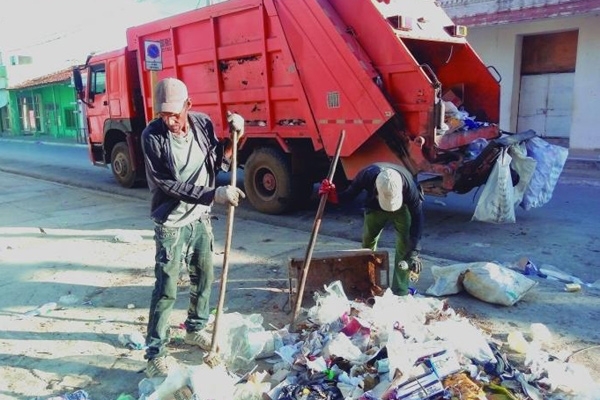
Ciego de Ávila.–After receiving approval from the Provincial Government Council of Ciego de Ávila, the Local Development Project CostÁvila has been launched, an innovative initiative in central Cuba, created to address the urgent demand for a public cleaning and waste management system that combines efficiency, citizen participation, and environmental sustainability.
According to its manager, Osmany Costa Reyes, who explained via social media, the initiative will combine operational work with a strong educational and community component, aiming to promote civic responsibility and care for the environment.
The main objective of CostÁvila is to guarantee services such as urban waste collection, street sweeping, and maintenance of green areas through a local management model. This model prioritizes dignifying labor, optimizing resources, and ensuring long-term sustainability.
Among its specific goals are the gradual strengthening of local infrastructure with the acquisition of suitable transportation means and containers, guaranteeing systematic maintenance of equipment to extend its useful life and ensure service continuity, and promoting environmental education in schools, neighborhoods, and workplaces.
Similarly, it aims to foster community participation through cleaning campaigns, recycling, neighborhood watch efforts, and the establishment of partnerships with government entities, social organizations, and economic actors.
Under the motto "Responsible Management; Healthy Community," this pioneering project in the province also includes supplying municipalities with materials and implements for the collection and processing of waste.
A fundamental pillar of the Local Development Project is the revaluation of human resources through better salaries, uniforms, protective equipment, training, and attention to the personal and family needs of workers.
Costa Reyes emphasized that CostÁvila will not charge the population for basic communal hygiene activities, will generate savings for the provincial economy, and is aligned with global sustainability agendas, which could facilitate access to national and international financial support.
According to the manager, the initiative goes beyond the concept of a temporary response; it represents a commitment to the comprehensive restructuring of the solid waste management system and the preservation of the community environment.
_large_large.jpg)