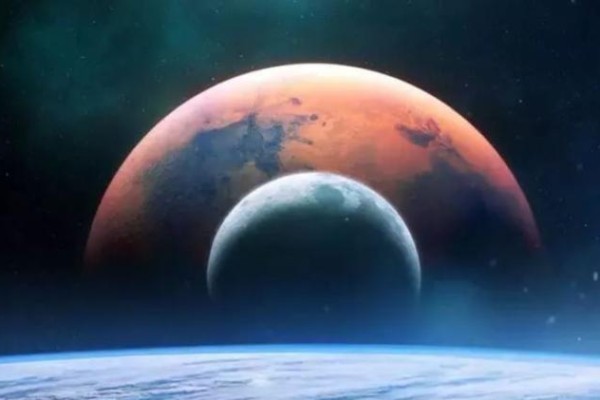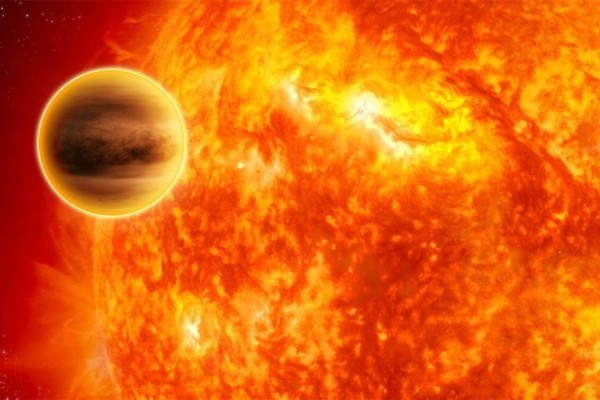
Washington, January 2nd - The year 2026 arrives with an uncommon astronomical event, as Mars and Venus will be passing almost simultaneously behind the Sun, in a rare alignment known as a double solar conjunction, NASA reported.
During these days, both planets are so close to the Sun in the sky that it is impossible to observe them without special instruments, while astronomers advise against attempting to look directly at them, as it could damage your eyesight.
Venus and Mars orbit the Sun on opposite sides of the Earth; the former is the inner planet and also the brightest that can be seen from ours, while Mars is an outer planet, known for its characteristic reddish color.
However, currently both are traveling through the sky practically alongside the Sun, which explains their temporary disappearance from the night sky.
Images captured by solar satellites such as GOES-19 and the SOHO spacecraft allow observing this phenomenon safely, detailed the U.S. space agency.
In these images, the intense glare of the Sun is artificially blocked to reveal what is happening around it, showing both planets hidden behind its light.
According to NASA's announcement, Venus will reach its superior solar conjunction on January 6th, when it will be most directly aligned behind the Sun as seen from Earth.
Three days later, on January 9th, Mars will do the same, moving in the opposite direction in the sky.
According to experts, this temporal closeness between both conjunctions is what makes the event especially rare and significant for astronomers.
After this cosmic encounter, the planets will gradually reappear in the sky, but differently: Mars will begin to be seen in the mornings before sunrise, first in the southern hemisphere and later in the northern hemisphere, probably around March.
Venus, for its part, will take longer to return and will not dominate the evening sky again until February 2026, when it reappears as the bright “Evening Star.”
(Taken from Prensa Latina)