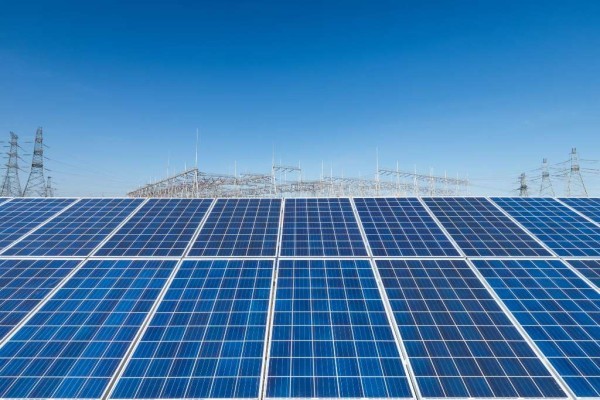
Havana, January 2 (Prensa Latina) — Solar panels currently cover 14,500 km² worldwide and have tripled installed capacity since 2017, as revealed through mapping using satellite imagery and Artificial Intelligence (AI) tools.
This updated count was promoted by Global Renewables Watch (GRW) through machine learning algorithms, mapping the extent of solar panels on the Earth's surface.
The mapping allows for highly precise and high-resolution detection of global solar panel coverage from space.
It is estimated that these installations total more than 2.2 terawatts of capacity worldwide and now cover an area equivalent to the size of Northern Ireland, stretching from the Atacama deserts to the mountain ranges of Tibet.
According to the latest medium-term forecast by the International Energy Agency (IEA), global renewable electricity generation capacity is expected to double by 2030.
By that year, the IEA estimates that the global renewable energy capacity will increase by approximately the equivalent of adding together the total generation capacity of China, the European Union, and Japan.
According to the source, this energy is expected to dominate renewable growth by the end of the five-year period, remaining the most cost-effective option for new generation in most countries.
The result of the count carried out by GRW is a global map ranging from large solar parks in deserts to scattered installations in urban and rural areas, as reported by the Gizmodo portal.
This innovative methodology helps clarify how much solar capacity is installed and how much physical space it actually occupies across the planet. China leads in this sector, followed by the United States and India in the top positions.
Overall, the IEA forecasts that photovoltaic solar energy will represent about 80 percent of the global increase in renewable energy capacity over the next five years, driven by low costs and faster permitting timelines, followed by wind power, hydropower, bioenergy, and geothermal.
(Taken from Prensa Latina)