In addition to all the economic and political blockades, imperialism is deploying against Cuba the most prolonged, systematic, and sophisticated Cognitive Warfare in the inventory of semiotic domination in our time. It is not waged solely against a territory, nor against a government; it is waged against a historical possibility of human thought. Cuba is not just a country; it is an emancipatory semiosis, a symbolic architecture that condenses the experience of organized dignity. To attack Cuba is to attack the hypothesis of conscious freedom. Therefore, the enemy deploys its entire arsenal of cognitive distortion, perceptual manipulation, and emotional colonization against it.
I. Semiotics of a prolonged aggression
Every war is a dispute over meaning. But in Cognitive Warfare, meaning itself is turned into a weapon. A society's capacity to interpret its reality, to love itself in its history, to think about itself from its own experience is attacked. A machinery of desemantization has been designed against Cuba, the objective of which is not to physically destroy, but to semantically empty the signs of the Revolution, to make "sovereignty" mean isolation, "socialism" mean backwardness, "revolution" mean dictatorship. Semiotic imperialism consists precisely in imposing the dictionary of domination as if it were a universal language.
For more than six decades, Cuba has been both a laboratory and a mirror, a laboratory where new technologies of imperial persuasion are tested, and a mirror where the world observes, according to its conscience, the dignity or rebellion of a people who decided to think of themselves without masters. Cognitive aggression is not limited to newspaper headlines or Hollywood scripts; it infiltrates the matrices of perception, the algorithms of emotion, and the structures of desire.
II. Cognitive weapons, from rumor to the neurosemiotics of hate
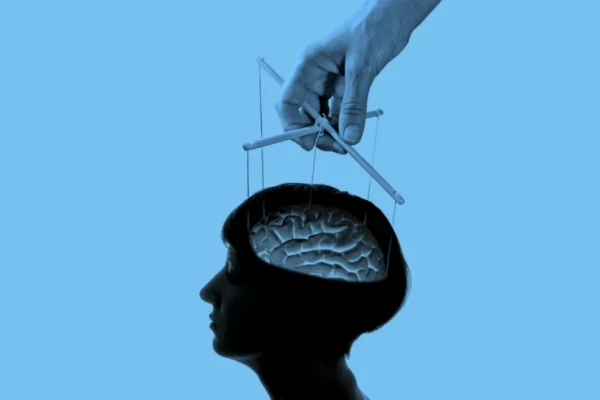
Their cognitive weapons are "invisible" but lethal. They don't fire bullets, but poisoned metaphors. They don't occupy territories, but brains. Imperial intelligence works on a principle that critical semiotics must lay bare: to master is to control interpretation. That's why semiotic microclimates are fabricated—scenarios where words are charged with induced passions—and analytical categories are supplanted by prefabricated emotional stimuli.
Their imperial social media networks have become the new battlefields. Artificial intelligence algorithms monitor reactions, segment populations, and adapt messages according to each group's psychological breaking points. This is the neurosemiotics of hate, a machine that seeks to trigger dissolving emotions, deactivate historical memory, induce frustration, and blame socialism for the effects of the blockade. The strategy is not to debate ideas, but to saturate consciousness with toxic emotions until it nullifies the capacity for criticism. Cuba is subjected to an aggression where fake news is a symbolic bullet and every media silence is a vacuum bomb. This is how the engineering of discredit operates; the aim is not to refute the Revolution, but to poison perceptions so that the concept of Revolution loses its power to rally. And then they call it a "dictatorship."
III. Ontology of Cognitive Blocking
Its economic, political, and financial blockade has its counterparts in a cognitive blockade. It aims to prevent the world from thinking about Cuba as a possibility, to isolate it from global thought by a wall of prejudice. The cognitive blockade produces an inverted reality: the aggressor appears as a defender of freedom, and the victim, as the oppressor. It is the semantic terrorism of colonial language. Our philosophy of semiosis proposes that every act of interpretation is a battle for being. What is blocked in Cuba is not only the entry of goods, but also the circulation of emancipatory meanings. Imperialism needs to prevent the words "free education," "internationalist doctor," or "solidarity" from becoming desirable for the people. That is why it promotes a global system of semiotic poisoning where spiritual poverty is disguised as progress.
IV. Perception engineering, the myth of the “closed society”
One of the most subtle operations of the cognitive attack is the myth of the "closed society." A narrative is constructed that portrays Cuba as an enclave frozen in time, without freedom, without creativity, without joy. It's the old colonial rhetoric, but now with a Netflix aesthetic and the grammar of a bourgeois influencer . Criticism is deliberately confused with slander, analysis with sarcasm. Its objective is to induce ontological guilt, to make the Cuban people feel ashamed of their revolution, to make it seem outdated, to make youth internalize as "backwardness" what is in reality ethical coherence and a full future. This is how they seek to empty everyday heroism, shared lines, and collective invention in the face of scarcity of meaning. The enemy wants every material shortage to translate into symbolic demoralization. Into moral defeat.
V. Cognitive resistances, semiosis of dignity
But there is another war—silent, profound, creative—that Cuba wages with genius, the war for emancipated meaning. Every literacy teacher, every internationalist doctor, every musician or teacher is a guerrilla of semiosis. In them, the sign is not sold or bowed down, it is shared. Cuban revolutionary culture has demonstrated that the sign liberated from the commercial fetish can be an ethical source of beauty and conscience. Cuba resists not only with vaccines, but with symbols. In its cinema, its poetry, its education, and its communication, an epistemology of dignity beats. In the words and indelible presence of Fidel, Raúl, Che, and Camilo. This is a semiotic praxis of a new kind; it does not seek to "compete" in the symbolic market, but to de-commodify the production of meaning. On a planet where entertainment has become a global anesthetic, Cuba insists on memory, on critical speech, on art as a form of truth.
VI . Philosophy of attack, the fear of conscience
Why so much hatred against a small country full of dignity that cures the sick and teaches reading? Because imperialism fears an idea more than an army; it fears conscience. The Cognitive War against Cuba is not explained by geopolitics, but by the semiotics of fear. Cuba demonstrates that a society is possible where the means, modes, and relations of production of meaning are not private property, where culture is a common good, where collective intelligence triumphs over profit. This demonstration, however imperfect and besieged, is unbearable for the bourgeois world order. Capitalism needs humanity to believe there is no alternative. Cuba proves the opposite. That is why it must be destroyed not physically—that would be too obvious—but symbolically, so that the myth of the “ancient socialist failure” prevails as a psychological truth. Cognitive Warfare is the contemporary form of epistemological terrorism.
VII. Towards a semiotic counteroffensive
Responding to this war requires more than communication; it requires a revolutionary Philosophy of Semiosis. It is necessary to create intelligence of consciousness, scientific systems to detect, analyze, and dismantle the enemy's cognitive operations. This is not about propaganda, but about militant epistemology. Cuba can also be a vanguard on this front if it transforms its cultural accumulation into a global laboratory of emancipatory communication. Every school, every community radio station, every network of thought can be a node in the network of liberating semiosis. The defense of thought is the defense of life. We must educate people cognitively, teach them to read the enemy's signs, detect the traps of induced emotionality, and dismantle the metaphors of power. The semiotics of the Revolution must become an everyday method, critically considering every image, every word, every gesture.
VIII. Conclusion, the emancipated and emancipating sign as a trench
This Cognitive War against Cuba is the most advanced expression of symbolic colonialism, but also the stage where the new science of communicational emancipation is forged. Faced with the arsenals of deception, Cuba responds with the lucidity of its people, with the power of its culture, with the ethics of its memory. Cuba is not only a victim, it is a teacher. It teaches that dignity, when it becomes a method of thought, dismantles empires. It teaches that the sign, when freed from the capitalist fetish, can be both a trench and a horizon. It teaches that consciousness, when organized, is invincible. In the era of artificial intelligence and mass manipulation, the Cuban Revolution remains the most audacious semiotic event of the 20th century that still pulsates in the 21st, a revolution of meaning, an act of cognitive sovereignty. To defend it is to defend the very possibility of thinking freely. Because the Cognitive War against Cuba is, at its core, a war against thinking humanity. And resisting it—with science, art, and conscience—is the highest form of love for the truth.
For all these reasons, the operation to break Fidel Castro's symbolic power combined the cold technique of sabotage with the emotional architecture of defamation. It wasn't enough to conspire to eliminate the leader physically; it was necessary to erode his aura, transforming his public presence into a fable of failure and ridicule. From covert plans described in official documents to radio campaigns and pamphlets designed to sow distrust, the strategy was always twofold: to discredit Fidel's word and, simultaneously, to rewrite the collective memory that legitimized him.
All the declassified files show that the CIA and associated networks practiced both physical annihilation and symbolic degradation—from media harassment to grotesque proposals designed to humiliate (the famous "cigars," the manipulation of his image, the sabotage of speeches)—because they knew that Castro's moral imprint exceeded any military target; attacking him publicly was attacking the narrative epicenter of the Revolution. Semiotic violence was therefore an instrumental extension of political aggression. Added to this repertoire were exogenous and local actors who fueled a total war of rumors, false attributions, and press operations—from anti-Castro militants to diaspora groups that acted as multipliers. Disinformation was fueled by a precise logic: turning the ethical exceptionality of the Cuban project into a scandalous anecdote; translating international solidarity into fraud; and making people believe that Fidel's moral leadership is nothing more than cynicism and pretense.
Philosophically, the attack on Fidel reveals the desperation of hegemonic power in the face of the possibility of an alternative ethos. It's not just about defeating a man, but about neutralizing a way of speaking, acting, and summoning collective hope. Therefore, the emancipatory counteroffensive must address the symbolic dimension of the struggle, recover the narrative, reinstall critical memory, defuse the semantic bomb of discredit, and once again transform words into praxis. Only in this way can the operation that sought to turn Fidel into a warning rather than an example of moral insurgency be dismantled. "Prevent him from being God."
This Semiotic War against socialism is the laboratory where capitalism crafts its grammar of fear. It is a total offensive against language and imagination; the enemy is not fighting an economic doctrine, but a form of sensibility. The symbol "socialism" is manipulated until it is saturated with negative connotations: failure, repression, misery. It is a war where concepts are replaced by conditioned reflexes, where the word "collective" is associated with the loss of freedom and the word "market" with life. Capitalism, a master of fetish creation, requires socialism to be perceived as a pathology of history, an unnatural deviation of the modern individual. Thus, the semiotics of fear of "we" is implanted, the class anesthesia that prevents us from imagining any communion of solidarity that does not involve consumption.
But socialist semiotics, although under siege, retains a latent power that capitalism fears: its ability to translate justice into beauty, cooperation into knowledge, and equity into a symbolic horizon. That's why the enemy never ceases to attack its language, infiltrating sarcasm into education, trivializing its history, and caricaturing its achievements. It wants to make them old at all costs. It's an attempt to drain the very idea of emancipation of its soul. However, wherever the word "socialism" manages to recover from slander and once again become a seed of hope, an epistemological miracle occurs: consciousness is emancipated from the fetish, the sign once again becomes an instrument of truth, and the class struggle becomes a struggle for the meaning of the world.
That is why we need the dialectic of self-criticism as a scientific antidote to the petrification of the revolutionary sign in the midst of the Symbolic War. No emancipatory project can sustain its power if it does not rigorously and courageously review the ways in which it produces and communicates its own meanings. In a scenario where the enemy dominates global semiosis—emotions, narratives, algorithms—the danger is not only being defeated by lies, but also repeating them without realizing it. Semiotic Stockholm Syndrome. Self-criticism is the highest form of collective intelligence, the awareness that even just causes can fall silent under the rubble of their own rhetoric if they do not renew their ways of speaking and feeling. In the war of meaning, error is paid for not only with confusion, but with disaffection. The revolution that does not analyze itself, that does not investigate its communication failures, becomes its own symbolic enemy.
It is extremely urgent for all of us to redirect the semiotic battle for emancipation. Hand in hand with Cuba. Self-criticism is not self-destruction, but rather ensuring that the truth of the ends is not betrayed by the means. It is an exercise in semiotic hygiene, a pedagogy of lucidity, a practice that prevents consciousness from fossilizing in empty slogans. In the Symbolic War, where the adversary turns every weakness into a spectacle and every contradiction into proof of "failure," self-criticism is a form of offensive; it reveals the ethical maturity of a movement capable of reflecting and correcting itself without asking the enemy's permission. Only a living semiosis—capable of self-regulation, of integrating error as learning—can sustain the cultural initiative. Where there is self-criticism, there is a thinking revolution; where it is lacking, the domestication of the symbol and the triumph of imposture begin. And there is no time to lose.
(Taken from Telesur)