Expectations regarding the implementation of a floating exchange rate market in our country have reached their peak, and the Central Bank of Cuba (BCC) has finally announced its official launch.
Specifically, this means that the BCC is formally entering the foreign exchange market as an additional competitor, but administratively intermediating in it, so that exchange rates will no longer be fixed but will float daily according to supply and demand.
Although this is a necessary measure, it is important to clarify that it is not being implemented at an ideal time for the economy, and it faces challenges such as low production levels, declining exports, external restrictions on access to credit and financing, and still high fiscal deficits.
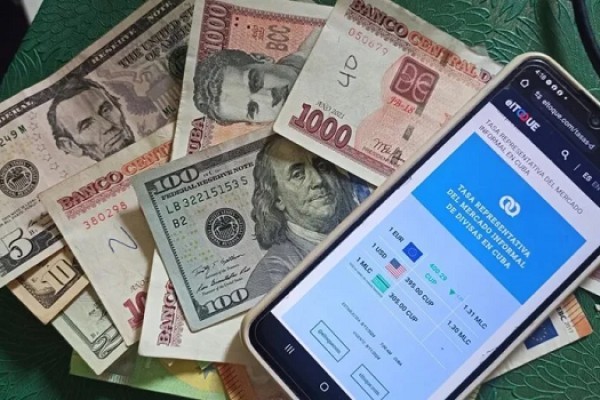
This implies that, initially, total satisfaction of potential demand cannot be expected, and although the stated aim is to reach a rate that truly reflects the real conditions of the economy, the logic of competitive exchange rates imposes certain incentives and, therefore, at the beginning, the rate will need to remain close to that which currently prevails in the informal market.
According to what has been announced, in the first stage of the exchange rate system, it will be structured into three segments: the first two corresponding to existing fixed rates. That is, a first segment operating at 1 to 24, and a second segment at 1 to 120.
The innovation involves the incorporation of a third segment, accessible to both individuals and legal entities, whose rates will be published daily by the BCC in its capacity as the country’s monetary authority.
While it is strategic for all economic actors to operate under equal conditions, the unification of the rates can only be achieved gradually through successive future adjustments. A sudden devaluation of the peso would lead to inflationary effects greater than those currently experienced.
The convertibility of the Cuban peso is vital. Our economy is small and open, dependent on the external sector, so this measure enables a better connection between the domestic economy and the external one.
In addition to natural persons and non-state forms of economic management, this market will also be accessible to exporting entities that generate foreign currency for the country through their bank accounts.
This represents a significant stimulus to export activity, as these entities will be able to benefit from better financial conditions that allow them to make investments, cover expenses in Cuban pesos, increase wages, among other incentives.
Exports constitute the main source of foreign currency inflow for the country; therefore, stimulating them is very important for the economy. Foreign currency supports our expenditures on energy, food, medicine, and other vital needs without which the country could not operate.
Regarding the population, they will be able to go to bank branches or exchange houses (CADECA) to sell their foreign currency. This is an added value, since these are safe and reliable spaces without the risks involved in operating in unofficial markets.
It has been reported that this market will sell what it buys, without demanding resources used by the country for its operations. Thus, availability for purchase could only increase gradually, as the market becomes more robust. It is a nascent system whose growth is only possible over time.
The regulation of this market will allow for better fiscal control. This will result in a reduction in inflation and a greater availability of resources for the national budget, which would benefit sectors such as health, education, and culture, among others in the budgetary system.
The dedollarization of the economy can only be eliminated through a greater availability of products and services in the national currency. For this, it is vital that part of the foreign currency earned incentivizes local production that positively impacts the market.
This is a goal for which the new exchange rate system creates favorable conditions for actors who have been facing difficult conditions for their resupply.
It is a fact that illegal rates have been serving as a reference in price formation, which directly affects the population. This is an effect that will not have an immediate solution, but will gradually dissipate, since the new rates will be backed by real operations, not by speculative manipulations as has been the case until now.
The informality of the exchange system has contributed to the emergence of criminal figures and created multiple distortions in the economy. Among these is the hijacking of international remittances, which not only affects the national economy but also the private economy of families. The new exchange system will allow those who receive remittances in foreign currency to have a safe place to exchange them.
Perhaps other advantages remain to be mentioned, but those exposed allow us to ensure that, without a doubt, an important step has been taken on the right path towards the necessary macroeconomic reordering. Even more than right, I would say this is a vital leap amid the visceral war imposed on us.
(Taken from Cubadebate)