The International Project of the Adaptation Plan for Coastal Municipalities of Havana, known by the acronym AdaptHabana, will extend its implementation until next June, five years after its approval in December 2021.
Ms. Yadira González Columbié, its coordinator, announced that the decision to conclude it on that date responds to strengthening the technical capacities of key actors and updating the information for its formulation.
She added that they have already evaluated and prioritized medium- and long-term adaptation measures, aligned with the country’s national socio-economic development plans.
González Columbié expressed her considerations at a meeting to evaluate the 2025 results of the management of the Working Group of the State Plan to Confront Climate Change, known as Task Life (Tarea Vida), a plan uncommon worldwide, approved by the Council of Ministers on April 25, 2017, and inspired by the thinking of Commander in Chief Fidel Castro.
The AdaptHabana project and its plan constitute a strategic tool that seeks to integrate engineering solutions and nature-based responses, as Havana’s infrastructure and biodiversity are exposed to the effects of climate change, and it is a vital space to consolidate the resilience strategy aimed at protecting the 47 kilometers of the capital’s coastline.
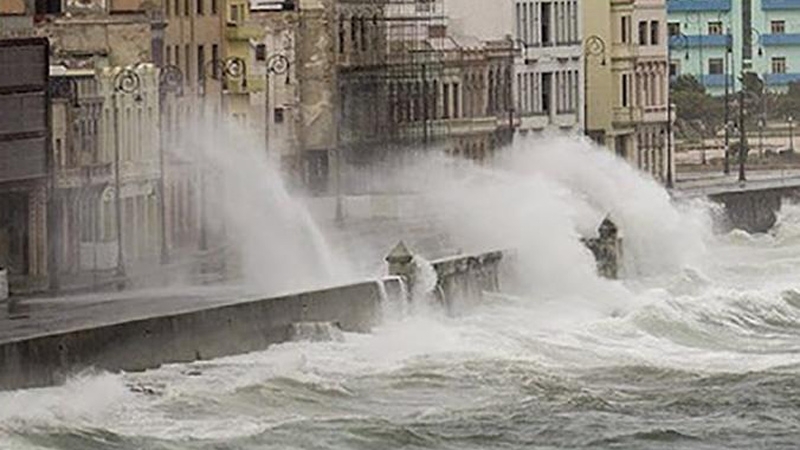
The main hazards exposed lie in sea level rise, a persistent process that threatens to reshape the coastline; extreme hydrometeorological events such as hurricanes and cold fronts with storm surges that cause severe flooding in low-lying areas; and, in third place, ecosystem degradation or the deterioration of natural barriers, which increases the vulnerability of urban communities.
Its implementation is led by the Institute of Geophysics and Astronomy of Cuba and the delegation of the Ministry of Science, Technology, and Environment, with the technical implementation of the United Nations Development Programme (UNDP) Cuba.
An essential objective is the application of a multidisciplinary approach that includes local governments, scientific institutions, and fundamentally the communities living along the coast.
_large_large.jpg)