No topic is foreign to art. And genres exist to concretize visions of all themes. Let’s join the debate: we believe it is very good that *The Rules of Rodo* (Cubavisión, Sundays, after the Noticiero Estelar) tells the story of a neurodivergent character. The fact that it is presented in a comedic tone does not diminish its significance, depth, or sensitivity in treatment.
It is useful to showcase a wide range of human nature on screen. By placing a character with Asperger's syndrome—part of the autism spectrum disorder—at the center of the narrative, the television series directed by Magda González Grau contributes to normalizing realities that are often far from cameras and spotlights. Autism should not be a taboo subject, no matter how much some might prefer to look the other way.
*The Rules of Rodo* addresses the issue with responsibility and respect through evident research. González Grau has stated in various forums that the team consulted with psychologists and methodologists, and approached several life stories. The series does not aim to emulate a scientific treatise. What was sought (and achieved) was an honest, emotional, and believable representation, free from stereotypes.
We should demand dramatic rigor from this television product, liveliness in storytelling, effective character design, and competence in presentation... *The Rules of Rodo* sufficiently meets those demands. The creators have opted for a complex narrative structure that somewhat recreates how the protagonist perceives reality. We insist: it is fiction; these are the resources of art, not an approach from science.
Magda González Grau leads a very functional team, which gives this proposal a quality that should set standards (and consolidate benchmarks) in national production. Her trajectory—demonstrated by the series *Calendario*—distinguishes her in the Cuban audiovisual landscape. Here she has maintained a creative process where aesthetics and ethics converge in an exemplary framework.
All aspects of the production meet the demands of the story. There is a subtle stylistic inclination that is never gratuitous or excessive. It is a clarity in form, an essential cleanliness in the structure. The photography, the use of colors, the soundtrack... establish an atmosphere that does not compete with the narrative.
The script by Amílcar Salatti offers an optimistic view, which does not mean that conflicts are evaded. There is careful emphasis on routines, on the small and not-so-small accomplishments of the central character. Without sensationalism or megalomaniac aspirations: simplicity is chosen in form and concept. *The Rules of Rodo* does not seek to scandalize or impress with radical twists; its strength lies in everyday life, in the rules that distinguish the title: the protagonist's world. This apparent narrative modesty is an act of bravery.
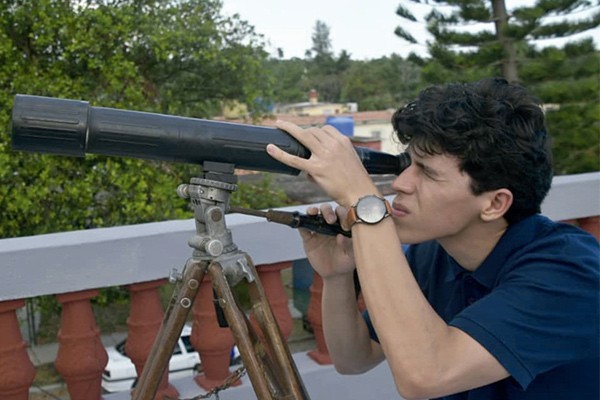
The commitment of all actors to their characters stands out. The cohesion of the cast is evident. Ignacio Hernández embodies Rodo in an outstanding exercise of characterization. The conscious work on body language, the way of looking and speaking, is notable.
It is worth emphasizing how language is used and how manifestations of the autism spectrum are portrayed. Terminology matters. Linguistic responsibility accompanies artistic focus and reinforces its social value.
There is still time left on screen: these considerations may seem rushed. But it is already undeniable that we are witnessing a success, a significant step towards increasingly inclusive, empathetic, and humanistic television. Art to make visible, understand, and celebrate diversity.