Havana, Dec. – For its leadership in the creation of a science and technology park, the province of Holguín will host the main event for Cuban Science Day on January 15, established in 1990, three decades after Commander in Chief Fidel Castro outlined the foundations of the country’s policy on human formation and scientific-professional development.
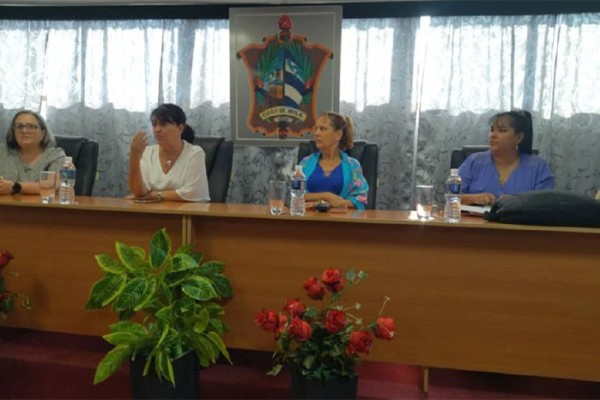
The celebrations for the anniversary will feature the presentation of nine patents, nearly seven thousand publications, and 263 new products, according to Armando Rodríguez Batista, Minister of Science, Technology and Environment (CITMA), who announced the good news for the people of Holguín.
According to a timeline from the agency, in 2012, Holguín won for the first time the hosting of the central event for Cuban Science Day, and on several occasions it has earned the distinction of Outstanding. Located about 800 kilometers from Havana, in the eastern part of the country, it is one of the largest territories and while traditionally an agricultural region, it is currently one of Cuba’s main industrial zones.
Known as the land of nickel due to its abundant reserves in the mining and metallurgical municipality of Moa, whose production generates economic income from exports, tourism has also seen remarkable growth in recent years.
It is considered the country’s third most important tourist hub because of its numerous natural attractions and, above all, its unparalleled beauty in its fields and beaches.
Its foundation dates back to December 3, 1976, with the New Political-Administrative Division, covering an area of 9,300 km² and nearly one million inhabitants, only surpassed by Havana and Santiago de Cuba.
It is a province rich in history and culture, recognized as the site of Christopher Columbus’s landing in Cuba and for cultural events, including the Romerías de Mayo, which promote local artistic and folkloric traditions.
Its economy is mainly based on nickel mining, possessing one of the largest reserves in the world, alongside tourism, industry, and agriculture — sectors that leverage the region’s natural resources and strategic location to foster economic and social development.
It takes its name from the capital city, Holguín, one of the most important settlements in eastern Cuba since colonial times, which has left archaeological traces still preserved in areas such as Banes (known as the archaeological capital of Cuba) and Gibara, where significant funerary and ceramic sites have been found.
On October 27, 1492, Christopher Columbus made his first landing on Cuban territory at the Bay of Bariay, located in the current municipality of Rafael Freyre.
Holguín also played a significant role in the wars for national independence, where Major General of the Liberation Army Calixto García Iñiguez, a distinguished son of the province, fought.
En el año del centenario de #Fidel, el Día de la Ciencia Cubana, 15 de enero de 2026, tendrá como sede a:
— Ministerio de Ciencia, Tecnología y Medio Ambiente (@citmacuba) December 17, 2025
🥇 Holguín
Las destacadas son:
🔹Ciego de Ávila
🔹Villa Clara
🔹La Habana
Anunció en Mesa Redonda ministro de Ciencia, Tecnología y Medio Ambiente @citmacuba @ArmandoRguezB pic.twitter.com/KpFZQ3umvu
Taken from the Cuban News Agency (ACN)