Washington, Dec.— A new study published in the journal Science Robotics provides a systematic approach to evaluating both the efficacy and effectiveness of using social robots in therapy for children with autism.
The research focuses on joint attention, imitation, and turn-taking as key developmental mechanisms that can make a difference in autism interventions.
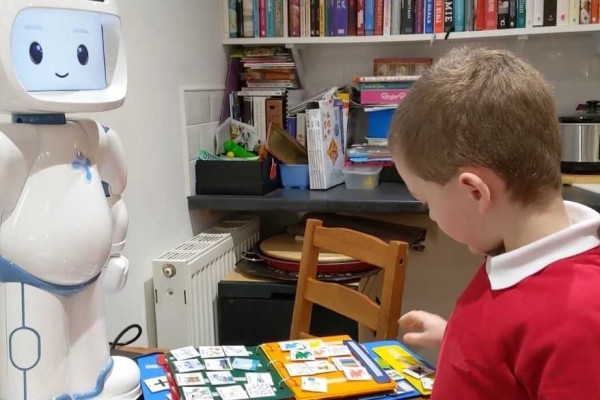
The scientists presented two randomized controlled trials with different implementations of robot-assisted therapy aimed at young children.
According to the Science Robotics publication, over the course of a modest dose of five sessions, results showed equivalence to standard treatment.
Both efficacy and effectiveness trials lend greater credibility to the beneficial role that social robots can play in autism therapy, while highlighting the potential advantages of portable and cost-effective setups.
On the other hand, according to the I Social Foundation, the concept of ASD (Autism Spectrum Disorder) emerged in 2013, when the American Psychiatric Association (APA) unified autism and Asperger syndrome under a single diagnosis, considering that both conditions shared very similar traits.
According to this classification, ASD is a neurodevelopmental disorder that primarily affects the way individuals communicate and relate to others, characterized by the presence of very rigid patterns of thought.
Some examples include focused interests, deficits in emotional expression, and problems with nonverbal communication, while the first signs can be observed in very early stages of development, between the first and third years of life.
Currently, various studies suggest that robots help children with autism improve their social skills and reinforce positive behavior.
They can also help children understand the meaning of emotions, express empathy, self-motivate, and demonstrate behaviors and responses.
Data from the World Health Organization indicate that one in every 100 children has autism, which constitutes a diverse group of conditions related to brain development.
(Taken from Prensa Latina)

_large_large.jpg)