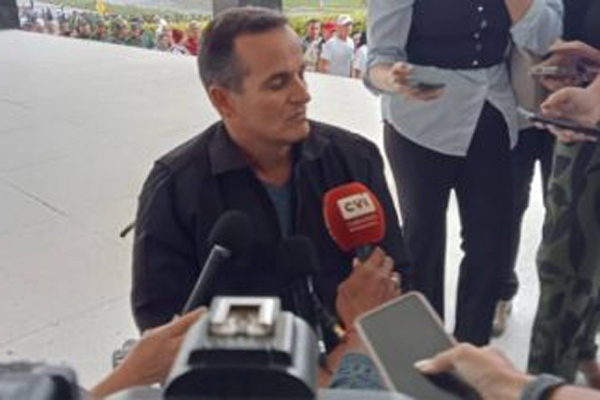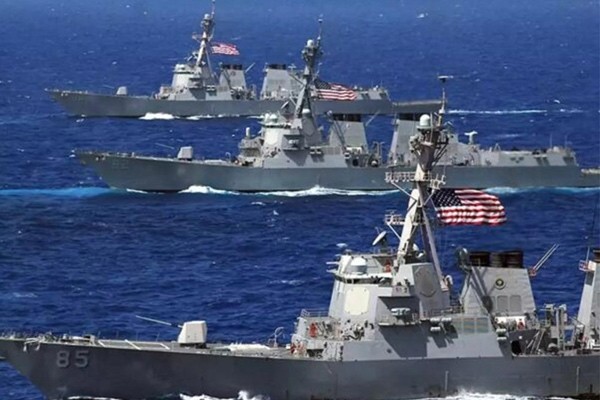
Mexico City, Nov. 21 – The military deployment of the United States in the Caribbean today poses a threat to Venezuela but also to alternative projects in Latin America, stated Mexican researcher José Antonio Hernández.
In a conversation with Prensa Latina, the Doctor of Latin American Studies from the National Autonomous University of Mexico (UNAM) commented on Washington’s motivations for escalating its presence in the Caribbean, as well as its rhetoric against the President of Venezuela, Nicolás Maduro.
Although he seems to have opened a door for dialogue with his counterpart according to recent statements, the North American leader, Donald Trump, sent his most advanced aircraft carrier to the area, ordered attacks on alleged drug-running speedboats, and military exercises were conducted near the South American country.
Addressing the reasons behind Washington’s campaign against Caracas and its leaders, Hernández, also a specialist at the Center for Research on Latin America and the Caribbean, pointed first to the geopolitical project that Venezuela represents.
He recalled Caracas’s promotion of the Bolivarian Alliance for the Peoples of Our America (ALBA), the Union of South American Nations (UNASUR), and the Community of Latin American and Caribbean States (CELAC), all focused on solving problems from within the region without U.S. interference.
“All of this openly challenged the hegemony of the United States” in the region, said the expert, who also mentioned the multipolar initiative promoted by the South American country through alliances with Russia and China, considered by Washington as a threat to its interests.
Hernández also referred to the value attributed by the northern territory to the natural resources of the southern nation, which holds the largest oil reserves in the world, in addition to gold, bauxite, and rare earth elements.
Regarding the pretext of drugs, used especially to threaten Venezuela, the UNAM researcher pointed out that drug trafficking, terrorism, and human rights have historically been topics employed by the United States to exercise influence in the region.
As examples of Washington’s use of these matters to intervene or change any government not aligned with its interests, he cited the invasion of Panama at the end of the 1980s, Plan Colombia, and the war on drugs in Mexico.
The United Nations (UN) itself has recognized that Venezuela remains free of illicit crops and has denied the accusations made by the United States against Caracas as a supposed central route for drug trafficking.
According to the 2025 World Drug Report, published by the UN Office on Drugs and Crime (UNODC), “the main highway” through which 87 percent of those illicit substances pass exits through the Colombian and Ecuadorian Pacific coasts, and only five percent attempts to cross through Venezuela.
Hernández highlighted that various nations and regional organizations have spoken out in defense of Venezuela's sovereignty and independence, as well as against any type of interference or militaristic approach in the area, including Colombia, Mexico, and Brazil.
In his opinion, a large-scale intervention in the South American nation would carry a high political cost for the U.S. government, especially due to the unified military command of the South American nation and the internal support for President Maduro's administration.
For the region, meanwhile, an armed conflict would have consequences in areas such as international law, since it would completely break the principle of non-intervention that has governed the majority of countries in this geographic area.
According to the expert, avoiding an invasion in Venezuela or the surrounding area involves strengthening integration mechanisms, multilateralism, and diplomacy, as well as bolstering internal projects, since the existence of strong popular support decreases the risk of any type of aggression.
Regarding the United States-Mexico relationship, he considered an intervention in this country unlikely due to commercial interdependence, although the U.S. administration “uses this threat as a pressure tool to seek concessions on issues such as migration or drug trafficking.”
“The Mexican government, while quite cautious, I believe has been very clear in its position about completely rejecting any kind of intervention, emphasizing sovereignty, and above all, advocating dialogue as a way to resolve controversies,” he stated.
He highlighted that President Claudia Sheinbaum has sought to maintain a stable relationship without abandoning the principles of foreign policy, and referred to a change compared to the positions of neoliberal governments (1982–2018), “which were strongly aligned with U.S. interests.”
Furthermore, “she has tried to seek alliances more with other actors in Latin America but also beyond the region,” the expert affirmed.