Transcript of the program Cuadrando la Caja, November 9, 2025
Dr. C. Marxlenin Pérez: Hello, how are you? It’s great to greet you again on Cuadrando la Caja, a television program dedicated to debating, questioning, and reaching consensus from the Cuban socialist perspective. I’m Marxlenin Pérez, and I welcome you to this different edition. Today, we will try to answer the question of why it is vital to stabilize the macroeconomy in Cuba. To discuss the importance and urgency of macroeconomic stabilization in our country, I welcome to the studio Master of Science Fernando Díaz, professor of Political Economy at the Agrarian University of Havana and president of the ANEC in Mayabeque; Doctor of Science Ricardo González, professor of Economics at the University of Havana; and Rafael Montejo, Master of Science, professor at the Center for Studies in Management Techniques at the University of Havana.
Dr. C. Marxlenin Pérez: There is a term that has been mentioned a lot, especially lately—macroeconomy—and from that perspective, critiques are often made about our management, planning, and so on. But there is also talk of macroeconomic imbalances to refer to the current state of affairs. Ricardo, I would like us to start by putting on the table what this term means: what are macroeconomic imbalances?
Dr. C. Ricardo González: Macroeconomic imbalances are fundamentally understood as persistent mismatches in four general accounts that exist within the economy. For example, the government balance, which is nothing more than the country's accounts of income and expenditures; when there is persistent excess spending above the deficit, there is an imbalance, a mismatch in the government’s accounts. But there are also deficits associated with what is known as the external balance of the economy, which relates to the balance of payments — the income and expenditures of the national economy with the rest of the world, including exports, imports, and also financial transactions, remittances. This is the second balance. Third, the monetary balance of the economy: money, money demand, and money supply. And last but not least, the balance of goods and services in the economy. When there are imbalances not only in one of these balances but across all of them — although it may start in a specific one — macroeconomic distortions are generated that can manifest in different ways. One way is inflation, but it is not the only one. There can also be recession in the economy, high levels of indebtedness.
Let’s think about our household economy, when we spend more than we earn. One way to maintain that level of spending above income is by borrowing money from someone. This generates indebtedness. When an economy becomes significantly unbalanced, levels of debt grow. And the debt levels of a country must be sustainable over time. Monetary imbalances can also manifest as the loss of international reserves. Central banks normally hold reserves to address imbalances in the country’s external accounts that affect the exchange rate. When the exchange rate is misaligned, expressing some kind of mismatch, one way the imbalance manifests is through the loss of those reserves.
Dr. C. Marxlenin Pérez: In the case of Cuba, which of these imbalances are occurring?
Dr. C. Ricardo González: In the case of Cuba, there are problems in all four balances. I believe the balance of goods and services is the most important because it reflects a significant gap — a difference between the economy’s installed capacities or potential installed capacities and what we are seeing the economy actually able to generate. Therefore, you have imbalances in all four accounts that are expressed in these problems. And if we were to ask, well, what does a stabilization plan do? A stabilization plan needs to address all these imbalances comprehensively, trying to operate not just on one of them, but on the whole set.
Dr. C. Marxlenin Pérez: As a system. But we will get to the plan soon. Let’s try to focus on this moment of diagnosis.
M.C. Rafael Montejo Véliz: Among these macroeconomic imbalances, the supply of goods and services is very scarce. There is a monetary mass looking for where to be placed. And since the supply of goods and services is increasingly smaller or more limited, and there is scarcity, logically a greater amount of money falls individually on many products, which is reflected in rising prices, inflation. It is very difficult in economics for there to be an imbalance in any of the essential aspects he mentioned that does not immediately affect—and also manifests in everyday life—because the wages and income that the population receives are diminished by the effects of these imbalances. And it also happens within productive units. Although it must be said that there are a series of problems that worsen all this, such as the power and energy issue, which means that production cannot be efficiently carried out even when raw materials and production capacities are available.
Dr. C. Marxlenin Pérez: Now, what factors influence these imbalances in an economy and affect macroeconomics? How does the external environment influence this area?
M.C. Fernando Díaz: It is good to look more broadly at what has happened in the case of Cuba that has economically affected the country. First, we must take into account the blockade factor, which substantially determines Cuban macroeconomics. It has intensified in recent years, since Donald Trump’s first presidency, and has strongly impacted the Cuban economy. Another factor to consider is the pandemic. How much was invested? How much was spent? How was it that the country was able to survive when the entire world was hit, and Cuba, with its own efforts and resources, was able to move forward with a scientific group? There are more internal issues related to the Monetary Ordering Task, which did not achieve what was desired with it and, in some way, has affected macroeconomics and even down to a lower level, microeconomics. Everything is connected and it is a chain. I think these are the most important impacts, and now we are moving towards seeing how to achieve macroeconomic stability, which would ultimately be the turnaround to a better quality of life, which is what we need in the socialism we are building.
M.C. Rafael Montejo Véliz: Regarding what Fernando said, it should be noted that the onset of the Monetary Ordering Task coincided with the impact of the pandemic—because storms are sometimes perfect storms, right? At the same time, the country was closed off and other countries closed their borders for months, there were closures of air routes, a drop in travel worldwide, and important sectors of the economy like tourism were affected.
The effects of the pandemic also caused disruptions in international logistics chains, which affected us. There was a general increase in prices, inflation in many countries and many products, and there is a transfer of that rise in international prices into the domestic economy. And if, as Ricardo was saying, there are imbalances in certain balance of payments, then you do not have the necessary resources to face debts, payments, prices that rise due to the blockade effect, logistical effects, or the effects of the pandemic. So, all of this creates a difficult situation to manage and navigate. Because any change that occurs in one place sometimes comes at the expense of other deficiencies you will find in the economy.
Dr. C. Marxlenin Pérez: Are these macroeconomic imbalances reversible, or is there a point where nothing can be done about them? Are we still in time? How does that work in economics?
Dr. C. Ricardo González: Without a doubt, they can be reversed. What you need is a plan, a stabilization program that, as I mentioned before, operates not only on one of the fronts of imbalance but allows for a comprehensive view of the problem.
Dr. C. Marxlenin Pérez: In the Cuban case, what are the imbalances that are affecting us the most right now? Can we say that one affects us more than the others, or does it happen, as we are talking about a system, that all are impacting equally to make the economy more difficult?
Dr. C. Ricardo González: There are problems in all four areas. I would say that the output gap, the supply problems in the economy, are a variable that should be looked at with great emphasis: bottlenecks, incentive problems, inherited inefficiencies, price system problems that need to be addressed. That is one part of the issue. Another part is the country’s external accounts. There is an official exchange rate that is far from being an equilibrium exchange rate of the economy, and that creates an important effect, mainly on the export sector, in a context where exports are intended to be promoted. Here there is a dilemma, and surely there is also a dilemma in public accounts, although it has been improving in recent years. There has been a relative improvement and I think we also need to look somewhat at the government’s balance sheets and public accounts.
M.C. Rafael Montejo Véliz: And to point out that we reached a fiscal deficit of 147,000 million pesos forecasted for one year. Then, last year it was greatly reduced. We reached almost 21%, about 18% of GDP committed to that significant imbalance. Revenues are also part of it, because the budget is also part of that—in other words, it can be like a thermometer where you can observe some of these imbalances. There has also been a strong cut in investment expenditures, many investments halted, except recently with investment in photovoltaic solar generation. Expense cuts also generate other problems: social problems, etc.
Dr. C. Marxlenin Pérez: In "Balancing the Books," we have paid special attention to this topic. Montejo hosted a program on macroeconomics; previously, we did another one also on the subject, and this would be like a sort of third approach to the problem. I invite you to watch on YouTube the program with José Luis Rodríguez about what was done and what worked from those measures and sequences to face the problems during the Special Period crisis. Now, the million-dollar question is: can we today take as a reference what was done in the 1990s, what worked, and evidently achieved the objectives that had been set? Is what was done in the 90s useful for us today?
Dr. C. Ricardo González: It is definitely a reference, without a doubt. In the 90s, a situation of significant imbalances also arose, initially explained by an external shock to the economy, problems in the external sector, the balance of payments, which transmitted to the rest of the economy and generated many problems somewhat similar to today's issues. And I agree with José Luis in that idea of the sequence followed by that stabilization program. I would like to complement that view a bit because stabilization must end in tangible matters such as producing more, exporting more, and accumulating international reserves.
If the stabilization program is not accompanied by these indicators — generating more foreign currency, producing more goods and services, and accumulating international reserves — it is difficult for a stabilization plan to be effective. So, when one looks at what was done in the 90s, one appreciates, indeed, all the measures José Luis mentioned in his intervention, but one also finds a set of structural transformations that were very functional to those objectives.
For example, the economy was opened to foreign direct investment for the first time in a long time; many international capitals entered, foreign currency came into the country, foreign currency ownership was decriminalized, remittances started; but also, in terms of domestic policy, self-employment was authorized, the peasant agricultural market was opened. Regarding state-owned enterprises, increasing autonomy was granted. That is to say, it was not only fiscal and monetary measures but also a set of structural reforms in the economy that were very functional for bringing foreign currency into the country, producing more, and accumulating reserves. And note this last point because it is important.
It is true that a currency, the CUC, was created; the people, the economic agents, trusted in a CUC equal to one dollar. So, clearly, this currency served to anchor expectations, especially currency expectations, of people who had confidence in the convertibility scheme. All these things worked together effectively. But I want to emphasize that, yes, if that is a reference, the question would be: what do we have, what has changed? Because today foreign investment exists, and remittances exist. So, the question we have to ask ourselves is what structural measures must accompany all the efforts being made in terms of fiscal and monetary adjustment so that the stabilization plan is truly effective. I believe that is where the main challenge lies, and surely we will touch on it later.
Dr. C. Marxlenin Pérez: There is a reference point for you, Fernando, regarding what was done in the '90s.
M. C. Fernando Díaz: Yes. Essentially, the first thing is that we have to view it as a system. As a system, not just a single macroeconomic measure. We need to solve the problem as an integrated system. That is the first thing. Many issues today have lost some relevance because that was a different era; today we live in another stage of development. But yes, I think that in some way, some of those measures that produced spectacular results at the time need to be strengthened now, because, for example, attracting foreign currency is an emergency for the country today, as that can bring a turning point for the macroeconomy. But we need to see how we are going to do it. It is not exporting just for the sake of exporting; you cannot export just anything. Market studies must be conducted worldwide. What can we really export? What can each territory export? What strengths do they have? But yes, foreign currency must be attracted. The science centers showed at that time that they could attract foreign currency. Well, what possibilities do we have today to recover that again? And much can be done in this regard, that is what I think.
Dr. C. Marxlenin Pérez: José Luis said on that program: "Money is needed." Speaking of what is urgent, what is important, where to start… Where would you start, Montejo?
M. C. Rafael Montejo Véliz: The first thing I want to say is that each historical period responds to its specific situation and has its peculiarities. I believe they have addressed that, but there is an element from what began in the '90s, which Ricardo and Fernando explained, related to people. One of the success factors, which is not purely economic, was that worker parliaments were established. That is to say, the situation was also addressed as a problem for everyone. Ministries were overwhelmed, and sectoral schemes were broken. Thus, making it everybody’s problem and the fact that people proposed many solutions, and many of those solutions with a level of autonomy that was given, logically led people to take ownership of many of those elements, some of which were more successful than others. Today, the situation may seem the same, but it is not exactly the same. First, there are diverse actors in the economy. We have a Constitution that recognizes private property.
There is an emergence of many elements that were not present in those years. That is a new element, so it must also be strengthened because if you already have multiple forms of property, what is necessary is to get them to interact, to integrate, and to turn that into potential, into a strength. Local and territorial development issues in the '90s were not as present as they are now. Today there is a rediscovery of the territorial aspect, and that rediscovery also offers potentials we did not have before. I believe that foreign investment has reached a point where, the more measures there are, they do not offer a greater margin of profit, to speak in economic terms. Part of the vision we have of foreign investment needs to be revolutionized — making it attractive despite the fact that the law and many factors there are apparently attractive, but also Cuba is on the list of countries supposedly sponsoring terrorism. That is to say, there are other factors at play. Therefore, international alliances to connect us with global value chains play a very important role here.
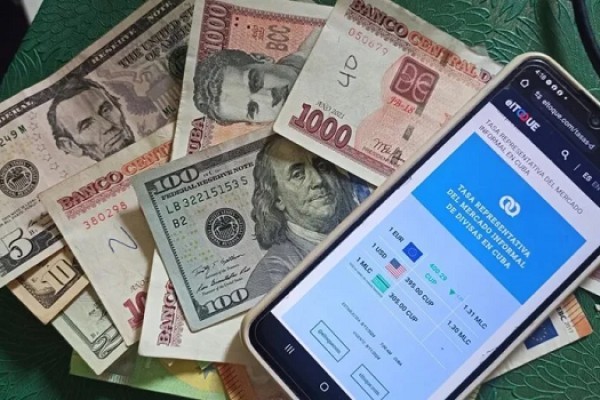
If we fail to maximize alliances with countries that have traditionally been Cuba's allies and with new ones, then it will have no effect, because foreign investment is currently working mainly through bilateral relations and not through offers or through someone coming to see if they can or cannot invest in Cuba. All of that must change substantially because this is a different historical moment. There is an issue Ricardo addressed regarding exchange rates. At the same time, contradictory elements are operating now that were not operating at that time. We have a process of partial dollarization of the economy, while at the same time we have multiple exchange rates. That disconnects the economy. Because if you are operating at 24 to 1 and others are operating at 120 and others with an informal market rate, logically there is a disconnect.
Dr. C. Marxlenin Pérez: But José Luis mentioned on that program that the foreign exchange market was not the first thing done in the 1990s, that before taking a measure in that regard, it was necessary to stabilize a series of parameters, right?
M. C. Rafael Montejo Véliz: The ones Ricardo mentioned—let's say fiscal deficit and some of those large imbalances. We still have to work through those for a while.
Dr. C. Marxlenin Pérez: That's why my question to you is about where to start in a macroeconomic stabilization program. What is urgent, what cannot be postponed?
M. C. Fernando Díaz: Attracting foreign currency, in my opinion.
Dr. C. Marxlenin Pérez: Of course, but attracting foreign currency also has the problem of a market called Cuba, which faces issues due to the embargo and the commitments we already have, which we haven't always been able to meet. How do you see it, Ricardo?
Dr. C. Ricardo González: I think we have to export; I believe one of the first objectives should be exportation. And it could also be said that attracting foreign investment, although it is subject to all those factors you mentioned. But exportation is fundamental. The question is how to export with a fixed exchange rate that has not moved since January 2021. That is, for the export sector of the economy.
Dr. C. Marxlenin Pérez: It is clearly not an incentive.
Dr. C. Ricardo González: It's a serious problem. What are the export sector's revenues? They come from international prices over the exchange rate. Of course, international export prices are set, determined outside Cuba. Cuba has nothing to do with that, Cuban companies have nothing to do with that, and the exchange rate remains fixed by exchange rate policy. And when you look at the prices in the internal economy, those not related to the export sector, they have been increasing at a triple-digit rate in recent years.
As the export sector has its fixed income, the rest of the products of the economy, the goods of the economy, are increasing, and what is known as a real exchange rate lag occurs, which harms the competitiveness and profitability of the export sector. So, the question is how does an industry that is progressively less profitable export? It makes no sense; there is no way to do it. And if you want to generate foreign currency, then how does a company with profitability problems generate foreign currency? This is what happens to Cuba's vaccine production, honey production, cocoa production, and the entire export sector in general. There is a dilemma that needs to be resolved. How do you export? Something must be done in the exchange rate sphere, and some proposals might be considered there.
Dr. C. Marxlenin Pérez: I propose we take a pause to hear what the Guru of Jatibonico has to tell us about this topic because, in the final minutes, we need to listen to proposals and also understand how this macroeconomic problem is addressed in the government program, in the macroeconomic stabilization program.
Guru of Jatibonico
Retraces the economy
parallel universes:
one with prices in the skies,
another poor in goods.
The challenge, the great struggle,
is to balance the rates,
and balance in the markets
the cassava with the pocket,
for continuing down that path
destabilizes the households.
Dr. C. Marxlenin Pérez: Well, I think you have the task here of responding to how to align the cassava with the pocket. The Guru already said it in verse. The question to start this last segment is: why is it important for a government program to begin precisely, as its number one objective, with macroeconomic stabilization? Although, at the moment, that is not reflected at the household level, which is the urgency that was just mentioned. Who wants to start with that?
M. C. Rafael Montejo Véliz: Macroeconomic stabilization programs generate, let's say, level playing field rules for everyone and make the competitiveness element, the incentive element, begin to stimulate production, profitability; the economy can start to move. Now, the reflection that this will have on everyday life is slower; there is always a gap between what you can improve from the perspective of macroeconomic balances and the effect it will have on daily life. There is always a delayed effect, a time lag. And, logically, after several years of economic crisis, there is always expectation and there may be despair, believing in a magical measure that will solve all problems.
Dr. C. Marxlenin Pérez: In economics, there are no magic measures.
M.C. Rafael Montejo Véliz: You are not going to have a supply shock that arrives like manna and solves all problems at once. Under Cuba’s conditions, it requires much more work. Therefore, there will always be that distance in terms of effects on daily life. However, it is indeed important and necessary to stabilize the country macroeconomically in order to then influence other variables that can visibly improve people's daily lives.
Dr. C. Marxlenin Pérez: Now, what should that macroeconomic stabilization program include? What cannot be missing? What would that crucial sequence be, the one you economists always mention?
Dr. C. Ricardo González: As I mentioned earlier, imbalances cause problems in these four economic balances; well, the problem must be addressed from those four balances. I think on the production side, on the supply side, something must be done. There is no stabilization without production. Much must be boosted on the production side, on the supply side; many bottlenecks need to be lifted, many incentive problems in companies—especially state-owned ones—need to be resolved; pricing misalignments must be addressed. That is to say, prices between the non-state and the state sectors are completely misaligned in today’s economy. Therefore, a process of price unification is also needed, which necessarily must be a gradual, progressive process. But it is necessary because, without it, it is difficult for the productive base—companies—to respond. Fundamentally, exchange rate policy is very important for the productive sector. That is, we must start to have an approach to what to do with the exchange rate, which is currently overvalued. There is a current proposal that concerns the relatively simpler part of the problem, which is the exchange market for the population, but the exchange rate problem in Cuba has been, is, and will be a problem of the business system. That is, what to do with the exchange rate for companies? I think that until the exchange rate for the exporting sector is adjusted—which implies aligning another set of prices because wages, and the cost of raw materials in companies, must be aligned—it will be difficult to have a productive response and, in turn, without a productive response, stabilization will be difficult to attain. And I would say two more things: enterprise autonomy, very important for the state sector; and the factor market, because the truth is that in order to operate, companies need to have inputs. And if they need to and must wait for allocation from the Ministry of Economy, it is difficult for them to respond adequately to market signals and international markets.
Dr. C. Marxlenin Pérez: How do you see it, Fernando? Do you agree?
M.Sc Fernando Díaz: I agree with Ricardo. Ricardo mentioned the need for the socialist state enterprise to play its role. Socialist state ownership in Cuba is the fundamental form of ownership, because that is why we are transitioning from capitalism to socialism, and this ownership of the state enterprise requires incentives for workers to achieve the role it must play. This ownership has to work alongside the rest of the companies, the different types of ownership that coexist with it in this transition to socialism. It cannot be limited by rules of "yes" for this one and "no" for that one. No. Together they build, because that ownership is social—its very name says so—it socializes the relations among all of them and, in some way, helps strengthen that ownership, which is the most important, besides being the majority, and defines our social system. Therefore, the worker of that enterprise must be on equal footing with the worker from other companies that are precisely not state-owned, but private or of another type.
Dr. C. Marxlenin Pérez: The rules of the game are not equal right now between state enterprises and private companies, although it may seem so. And the aspiration is that which has been discussed: relations under similar conditions.
M.C. Rafael Montejo Véliz: Yes, and Ricardo introduced a topic that also seems very important to me, and which has been debated here as well. We come from a system that has prioritized the administrative allocation of resources—some of which are vital. We are talking about electricity, diesel, water, in short, there are resources in the economy that are vital and transversal to everything—versus a vision that prioritizes allocation through the market. I believe that, under Cuba’s conditions, we cannot go to either extreme. I think that, under Cuba’s conditions, we have to seek a creative combination of mechanisms and levers that can be from centralized planning and allocation of certain resources alongside a growing use of market levers, which can also be planned. That is, you can regulate in the market certain elements ranging from prices to other kinds of resources such as labor resources, wages, and so on, but the incentive system has to be roughly equal for everyone.
There is also an institutional issue. We have to improve our institutions. If we don’t improve institutions, it is very difficult to comply with these rules of the game, to understand what role each entity plays within the economy. There comes a point when the signals are not clear as to where they come from: whether they come from centralized allocation through planning or, on the other hand, from a market game that also has no control, which involves illegal exchange rates, for instance, or other factors. This really generates dispersion in the management of the economy. We have to find a way for the fundamental reins of the economy, whatever they may be, to combine and be consistent with one another. That is the idea.
Dr. C. Marxlenin Pérez: The general outlines are made, the objectives as well, but I would like that in the few minutes we have left you would comment on how you see the solutions to the current macroeconomic imbalance situation.
Dr. C. Ricardo González: Going back, that is, in terms of what to do from the exchange rate perspective, now there is much talk, for example, about closed financing schemes. And it is true that closed financing schemes help to deal with the problem; on one hand, you have some income in companies that is directly in dollars, which the companies can use primarily to import inputs. The problem is that closed financing schemes do not solve other problems like, for example, the low remuneration in the state sector, the low wages. We want to export, but if we want to export, we need to pay workers better.
Dr. C. Marxlenin Pérez: How are we going to pay workers better?
Dr. C. Ricardo González: Exactly. Or we need to invest more. So, the question is how an industry with serious profitability issues can pay higher wages or invest more. There is a contradiction. I believe that the way forward to mitigate this problem would be, for example, combining the closed financing scheme with what would be a cash box with a corporate exchange house, for example, where the dollars from the closed financing scheme are exchanged for Cuban pesos from a financial institution operating with functions similar to those of a foreign exchange market. I believe this could help improve the profitability of the state exporting company and enable salary increases, so that salaries in the state sector converge with salaries in the non-state sector. And since they have more profitability, they could then carry out better investments and have a more stable direct source of financing. I think that is one way out.
Dr. C. Marxlenin Pérez: And you, Fernando, what can you propose?
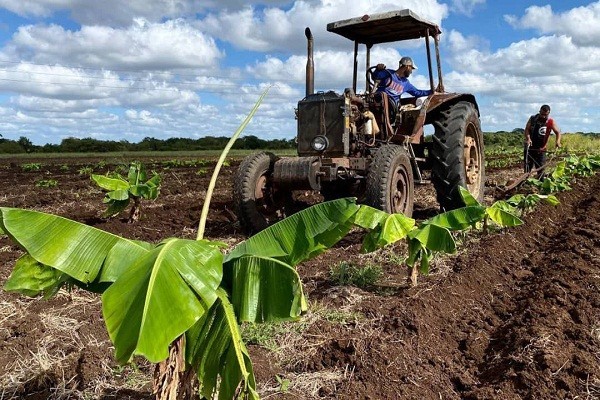
M. C. Fernando Díaz: We must continue insisting on incentivizing the agricultural sector. It has to produce much more. Its importance is crucial at this moment because that is where the people’s food supply comes from. And it is necessary to continue stimulating and encouraging that production to meet food demand. The other thing is the need to attract foreign currency, continue working in that sense, and that achieves the linkage with production so important to raise the GDP, which ultimately affects the economy and the family’s plate at the table.
Dr. C. Marxlenin Pérez: Montejo…
M. C. Rafael Montejo Véliz: I also go back. I believe that today it is very important for people to participate, for labor collectives to participate, for private micro, small, and medium-sized enterprises to participate. A government program, which may be more or less perfect, with more or fewer indicators, will depend on the people. And if people do not take ownership of it, if people do not make it their own, there is no creativity and no active participation; there are no solutions that today neither economists nor other specialists and experts are seeing. In a general collective debate, many solutions can emerge, and in fact, many times they do. And I agree that there are things that need to be unified a bit because otherwise there are no incentives for any type of company regarding what he was talking about with exchange rates, because indeed closed financing schemes have advantages for that sector, but how do they connect with other sectors? There are questions there that we still have not solved.
M. C. Fernando Díaz: But it has to be seen comprehensively.
Dr. C. Marxlenin Pérez: But those questions—do you have solutions for them?
M. C. Rafael Montejo Véliz: Well, he is making a concrete proposal, which is to have what he called a business exchange house within a corporate foreign exchange scheme. That is a solution.
Dr. C. Marxlenin Pérez: We will surely be inviting you to some program we do about the foreign exchange market and what you were telling me about floating rates and all these topics that are very interesting. I thank you for coming to the studio to talk about macroeconomics and how to balance macroeconomics that insists on becoming unbalanced. Remember that it is not enough to interpret, describe, or comment on our problems, but together we must participate to solve them. I count on you to do so from Cuban socialism. See you soon.
Transcription: Lianet Caridad Preval Avilés, Ana Elena Hidalgo Reyes / IDEAS Multimedios
In video, the program