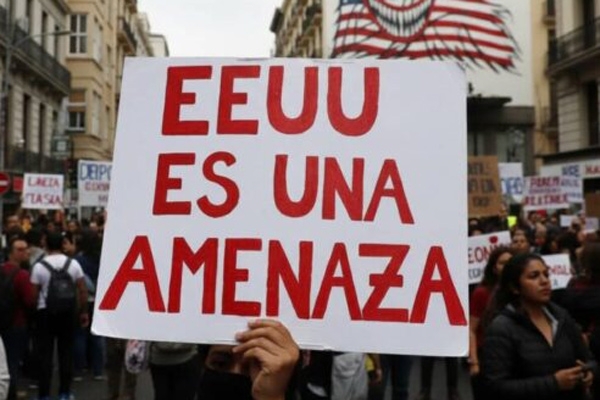
Since Hugo Chávez came to power in 1998, the United States has tried to overthrow the Bolivarian Revolution. They have tried everything except a large-scale military invasion: a military coup, selecting a replacement president, cutting off access to the global financial system, imposing multiple sanctions, sabotaging the electrical grid, sending mercenaries, and attempting to assassinate its leaders. If you can think of any method to topple a government, it is likely that the United States has tried it against Venezuela.
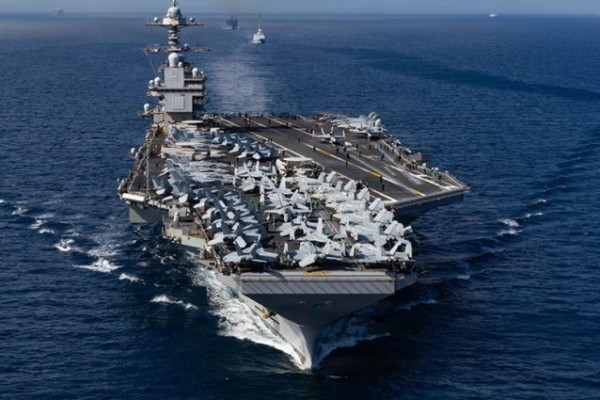
However, in 2025, the escalation became evident. The United States sent its warships to patrol the coast of Venezuela, began sinking small vessels and killing their crews as they left the South American continent, and captured an oil tanker headed for Cuba.
The number of attacks against Venezuela has increased, suggesting that the quality of threats has now reached a different magnitude. It feels as if the United States is preparing for a large-scale invasion of the country. Donald Trump came to power saying he opposed military interventions that did not promote the interests of the United States, calling the illegal U.S. war against Iraq a waste of “blood and treasure.”
This does not mean Trump is against the use of the U.S. military: he deployed it in Afghanistan (remember the “mother of all bombs”) and Yemen, and has fully backed the U.S.-Israeli genocide against the Palestinians. His approach is not categorically for or against war, but rather about what the United States would gain from it. In the case of Iraq, he stated that the problem was not the war itself, but the fact that the U.S. did not take control of Iraqi oil. Had the United States seized Iraq’s oil, it is likely that Trump would be in Baghdad, ready to build, with Iraqi treasure, a Trump hotel on one of the former presidential properties.
Naturally, the increased U.S. military presence in the Caribbean is related to Venezuelan oil, the largest known reserves in the world. The U.S.-backed politician, María Corina Machado, awarded the Nobel Peace Prize in 2025—after supporting Israeli genocide and calling for U.S. invasion of her own country—has publicly promised to open her country’s resources to foreign capital. She would welcome the extraction of Venezuela’s wealth instead of allowing its social wealth to improve the lives of its own people, as is the goal of the Bolivarian Revolution initiated by Hugo Chávez. A President Machado would immediately relinquish any claim to the Essequibo region and grant ExxonMobil full control of Venezuela’s oil reserves. This is undoubtedly the prize.
But it is not the immediate incentive. A detailed reading of the United States National Security Strategy for 2025 shows a renewed emphasis on the Western Hemisphere. Trump’s corollary to the Monroe Doctrine of 1823 is clear: the Western Hemisphere must be under U.S. control, and the United States will do whatever is necessary to ensure that only pro-American politicians hold power. It is worth reading that section of the National Security Strategy:
“After years of neglect, the United States will reaffirm and enforce the Monroe Doctrine to restore U.S. preeminence in the Western Hemisphere and protect its homeland and its access to key geographic areas throughout the region. We will deny non-hemispheric competitors the ability to position forces or other threatening capabilities, or to own or control strategically vital assets, in our hemisphere. This ‘Trump corollary’ to the Monroe Doctrine is a sensible and powerful restoration of American power and priorities, consistent with the security interests of the United States.”
When Argentina faced local elections, Trump warned that the United States would cut foreign funding if candidates opposing the pro-American president Javier Milei lost. In Honduras, Trump directly intervened to oppose the Libre Party, even offering the release of a convicted drug trafficker (and former president). The United States is acting aggressively because it has accurately assessed the weakness of the pink tide and the strength of a new “angry tide” of the far right. The rise of right-wing governments throughout South America, Central America, and the Caribbean has emboldened the United States to pressure Venezuela and, in doing so, weaken Cuba, the two main poles of the Latin American left. Overthrowing these revolutionary processes would allow total dominance of the Monroe Doctrine over Latin America and the Caribbean.
Since the 1990s, the United States began speaking of Latin America as a partner for shared prosperity, emphasizing globalization over direct control. Now, the language has changed. As the Trump Corollary states:
“We want a hemisphere that remains free from hostile foreign incursions or ownership of key assets and that supports critical supply chains… We want to ensure our continued access to key strategic locations.”
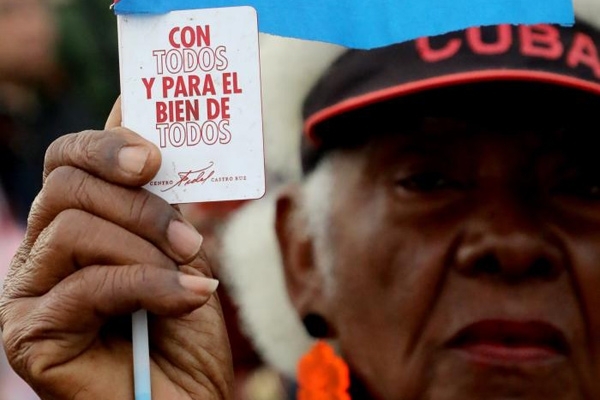
Latin America is seen as a battleground for geopolitical competition against China and a source of threats such as immigration and drug trafficking. The attack on Venezuela and Cuba is not just an assault on these two countries; it is the first salvo of direct United States intervention in the name of that furious tide. This will not provide a better life for the population, but rather greater wealth for U.S. companies and Latin American oligarchies.
Trump is willing to revive the belief that any problem can be solved with military force, even when other tools exist.
(Taken from Cubadebate)