Belém, Brazil, November 19 – The Cuban delegation at COP30 is deploying an agenda of alliances aimed at opening new pathways for financing, technological access, and international cooperation at a crucial moment to strengthen climate adaptation and resilience today.
Technical negotiations, new agreements, and project presentations mark each day at the forum, where Havana reinforces its presence on several fronts.
One significant step was the consolidation of ties with Italy, with which it held a working session focused on updating their cooperation in sustainable development.
The meeting allowed the launch of two strategic initiatives: one aimed at expanding the circular economy in the country through networks of laboratories and innovation centers, and another aimed at accelerating Cuba’s entry into carbon markets.
The first program will be supported by the United Nations Industrial Development Organization (UNIDO) and includes the creation of a Regional Circular Economy Center in the central province of Sancti Spíritus.
The second initiative, presented by specialists from the newly created technical mechanism for carbon markets, aims to position Cuba more favorably to attract mitigation-based financing.
Another highlighted point was Cuba’s proposal to design a regional initiative to protect vulnerable coastal areas, based on a mixed financial model combining repayable resources and donations.
The idea at the XXX United Nations Climate Change Conference (COP30) received recommendations from Italian experts to be complemented with additional sources of international funding.
Alongside these negotiations, Cuba also reviewed the progress of previous projects being implemented with other partners, including energy transition programs, coastal environmental studies, and monitoring tools developed in collaboration with European institutions.
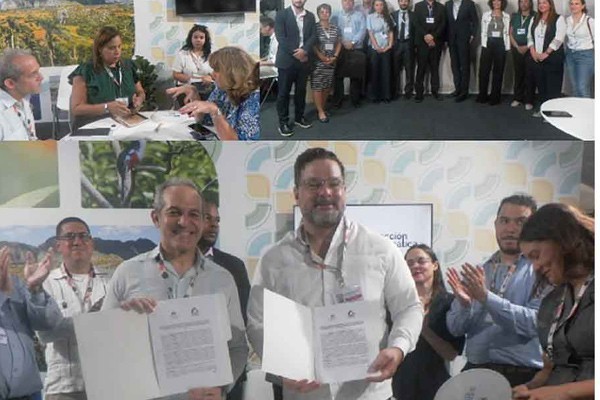
The bilateral agenda also added a new player: the Dominican Republic. The two countries signed a memorandum of understanding that establishes a framework for cooperation on ecosystem conservation, reduction of plastic pollution, climate risk mitigation, and strengthening of early warning systems. In parallel, Cuban representatives engaged in discussions with the United Nations Development Programme, analyzing ways to expand the island’s access to new international funds, including the Loss and Damage mechanism, the replenishment of the Global Environment Facility, and the Adaptation Fund.
The strategy—multilateral, technical, and financially diversified—aims to position Cuba in better conditions to access global mechanisms in a context where every source of cooperation counts.