In a world where digital transformation is redefining economic sectors, the International Fair of Havana (FIHAV) stands as an essential platform for Cuba's integration into new global dynamics. For its 2025 edition, the Fair will not only consolidate its role as the main commercial event in the country but will also take a strategic step by integrating Artificial Intelligence (AI) as one of its central thematic axes. This decision aims to revolutionize the experience of exhibitors and visitors, transforming the event into a more intelligent, connected, and personalized space.
In light of this outlook, we spoke with the Deputy Minister of Communications (MINCOM), Aylin Febles, to gain firsthand insight into the vision and concrete plans that will position FIHAV at the forefront of innovation. The integration of AI tools in its communication, promotion, and implementation strategy promises to redefine interaction with investors, optimize the business ecosystem, and project Cuba as a hub for technological development in the region.
Deputy Minister, the International Fair of Havana is a fundamental pillar for the Cuban economy. Could you explain how the integration of Artificial Intelligence (AI) tools in the Fair's communication and promotion strategy can transform the experience of international exhibitors and visitors in the 2025 edition?
—The idea is that the area of artificial intelligence, which will be one of the five central thematic areas of the fair, is directly linked to what will be happening at the event. In the exhibition area, we have four fundamental themes where we will group available solutions.
“Therefore, the pavilions or companies exhibiting in sectors such as industry, agribusiness and environment (which is one of the thematic areas), health and biotechnology, art, culture, education and sports, or smart cities and mobility, will find opportunities for collaboration in the artificial intelligence area to apply AI in their respective fields.”
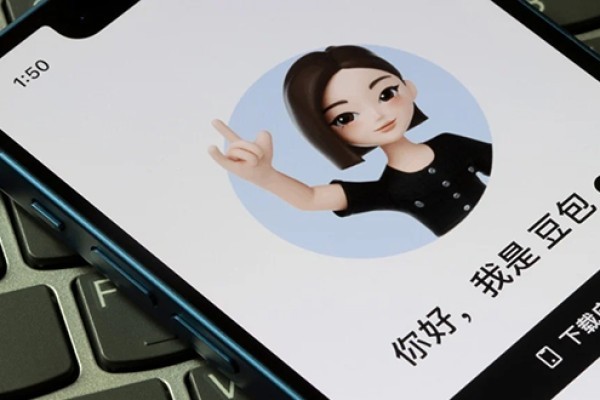
“We are going to implement a pattern recognition solution to identify visitors through facial recognition, using photos taken during the fair. We will also present avatars in the artificial intelligence area. But above all, potential partnerships will be generated based on launches and projects presented there. I believe all this represents a series of new opportunities for this edition of the fair.”
One of the great advantages of AI is personalization. Does FIHAV 2025 contemplate the implementation of virtual assistants or intelligent chatbots, capable of serving in multiple languages and guiding investors in a personalized way about the business opportunities that Cuba offers?
—We are working to incorporate them into the fair's website. In the area of artificial intelligence, we will have solutions that will, for example, allow online translation into any language for any delegation. That is, in that area, we will not need translators. It will be a very interesting experience.
“We will also have spaces where we will explain what is happening in the area of artificial intelligence. There, people will be able to ask about the AI strategy, about the activities that will take place, and we will launch an Instagram profile to accompany this strategy. On that account, we will hold contests and pose questions to encourage interaction. In summary, we will apply several AI techniques in that space.
“AI is an excellent tool for data analysis. What plans are in place to use predictive analytics to analyze business trends and connect Cuban supply more efficiently with foreign demand, thus creating a smarter and more proactive business ecosystem?
“We are going to implement sentiment analysis tools that will be available during the fair to extract useful information. We will also provide the jury with AI-based instruments that will help them award prizes, especially in communication.
“Additionally, we will conduct an analysis of social media behavior associated with the fair, with the aim of providing useful information to the organizers. This will allow for day-to-day decision-making: what happened today, what might happen tomorrow, and what can be improved for future editions.
AI requires new capabilities. What training programs or initiatives in digital skills and artificial intelligence are being promoted by the government so that the Cuban workforce is prepared to take advantage of these tools in events of the magnitude of FIHAV?
—When the digital transformation policy was approved, the national artificial intelligence strategy was also approved. This strategy includes a focus dedicated to developing digital skills across all sectors: among the population, children, youth, adolescents, and among managers who need to understand AI for decision-making.
“We have developed several actions. A digital skills workshop was held in the educational sector, and some of those actions will be showcased at the fair. In collaboration with the University of Camagüey and the Ministry of Higher Education, we are working on basic artificial intelligence books for different age groups. One of them will be launched at FIHAV 2025, and the others at the International Computer Congress 2026. Training programs in AI for companies will also be presented, which will be available at the fair.
FIHAV is the ideal platform to showcase the best of Cuba. Will there be a specific space within the Fair in 2025 for Cuban entrepreneurs, universities, and research centers to exhibit their developments and practical applications in Artificial Intelligence?
—Yes, one of the five thematic areas of the fair is precisely artificial intelligence. In that space, more than 70 Cuban solutions will be presented. The decision has been made to dedicate a specific area to showcase the results—modest but significant—that we have as a country in this field, as well as to foster alliances.
“Universities from all over the country will participate: Havana, Camagüey, Universidad Central de las Villas, Oriente, Cienfuegos, Sancti Spíritus, CUJAE, and UCI. There will also be state and private SMEs, as well as large technology companies showcasing their advancements. We have managed to gather a broad ecosystem of economic and scientific actors developing applications in this area.
“We have researchers who have been working in AI since the 1970s. In fact, one of the first degrees to incorporate this theme was Computer Science at the University of Havana. Cuba has a solid history in this field.
Looking beyond 2025, how do you envision the role of Artificial Intelligence in positioning the Havana International Fair not only as a commercial meeting point but also as a hub for technological innovation for the entire Latin America and Caribbean region?
—AI is a key tool to achieve this. We must leverage it, always with responsibility and transparency. We need to put the customer at the center: what do they want? How much do they want? What has been achieved? What can we solve through the fair?
“Applying AI techniques to the management, promotion, distribution of spaces, and analysis of results of the Fair is an opportunity we cannot miss. Everything we do today should consider how AI can help us do it more efficiently and effectively, adapting to our conditions.
For those attending the fair, from your role as organizer, what should they not miss?
—They must visit the artificial intelligence area, which will be in Pavilion 14, the communications pavilion. They should pay attention to project pitches, which will be very dynamic and conducive to establishing alliances. I also invite them to follow the Instagram profile of Artificial Intelligence Cuba, participate in contests, and interact with the robot and avatar we will have in that area.
“All of this responds to the digital transformation policy, the national artificial intelligence strategy, and UNESCO's recommendations on the ethical use of these technologies. All applications we will showcase have passed through that ethical filter.
“Additionally, we will try to ensure that the agreements and collaboration contracts signed in this area are done in digital format, with minimal paper and personnel involved, to demonstrate the potential of AI in processes like these.
Listen to the dialogue