Doubao is the name of an artificial intelligence (AI) assistant developed by ByteDance, the parent company of TikTok, which has positioned itself as the most widely used AI app in China. With more than 157 million monthly active users, it surpasses DeepSeek, which ranks second with 143 million, according to data from QuestMobile. Globally, Doubao ranks as the fourth most popular generative AI app, behind ChatGPT, Gemini, and AI Gallery.
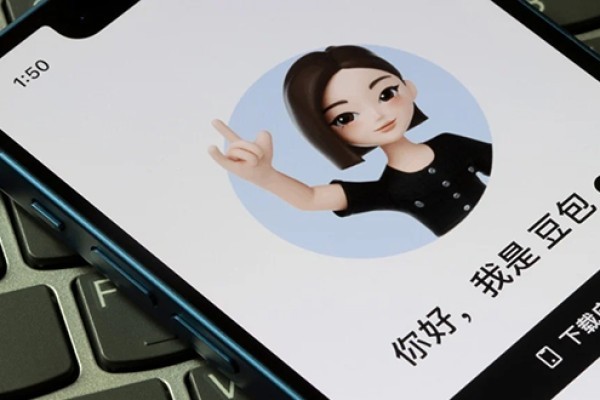
ByteDance launched Doubao in 2023 with a strategy focused on accessibility and visual appeal. The app icon features a cartoon-style female avatar greeting users upon opening the app. The name Doubao, which means “steamed bun with bean paste,” is meant to convey closeness and familiarity, explained Alex Zhu, vice president of ByteDance.
The app's interface is distinguished by its colorful design and multiple features. Unlike other AI apps that are perceived as one-stop tools, Doubao offers a more immersive experience. Users can interact with text, audio, and video; generate images, spreadsheets, presentations, podcasts, and short videos; and create custom agents for specific tasks that can be shared within the platform.
One of the keys to Doubao's success is its integration with Douyin, the Chinese version of TikTok. This connection allows traffic to be redirected between platforms and maintains user engagement. Doubao also recommends Douyin videos in its replies and allows users to watch them without leaving the app.
Doubao's offering has particularly appealed to people with little technological experience. Irene Zhang, a researcher at ChinaTalk, points out that many of the first users were older women, such as grandmothers and aunts. The app offers voice and video interaction, making it easier to use for audiences less familiar with digital interfaces.
Doubao represents a new generation of AI platforms in China. Poe Zhao, a technology analyst in Beijing, highlights that the app incorporates comprehensive features, clear visual prompts, and scenario-based guidance. These features lower the cognitive barrier to using advanced models and expand their accessibility.
ByteDance has demonstrated a remarkable ability to adapt its competitors' features. When Google updated Gemini to generate 3D objects, Doubao quickly incorporated a similar feature into its image generation menu. This agility in implementing new features has been crucial to maintaining its competitiveness.
Virality is another essential component of this AI-powered app's strategy. The app encourages social sharing by allowing users to tag the chatbot in Douyin comments and receive content summaries. Images generated by Doubao are widely circulated on Chinese social media, identified by a watermark in the lower right corner. On platforms like RedNote, users share Doubao-generated ideas for decorating personal spaces, ranging from practical suggestions to humorous suggestions.
Influencers have also embraced this AI to create content. The text-to-speech feature allows for the generation of chat agents with 20 regional dialects, making it easier to create comedic effects targeted at specific audiences. Zhang notes that there are viral videos in which users interact with Doubao to repeat memes with voice, reinforcing its appeal among those who prefer spoken communication.
Doubao's rise over DeepSeek is explained by ByteDance's experience in developing viral apps. The company, known as the "app factory" in China, regularly launches new platforms and has a solid structure for iterating features and guiding users. DeepSeek, on the other hand, maintains a narrower focus, centered on a text-based chatbot with outstanding capabilities in mathematical and logical tasks, but with less multimodal functionality.
Many users abandoned DeepSeek due to the lack of features such as image generation or autonomous agents. Furthermore, DeepSeek's servers struggled to handle traffic, prompting a migration to Doubao. According to QuestMobile, about 40% of those who left DeepSeek moved to Doubao.
ByteDance is now looking to expand Doubao beyond mobile devices. The company has initiated collaborations with smartglasses, automotive manufacturers—including Tesla—and other OEMs to integrate Doubao as a car assistant or AI companion. This strategy aims to consolidate its presence throughout the technology ecosystem.
Taken from Cubadebate