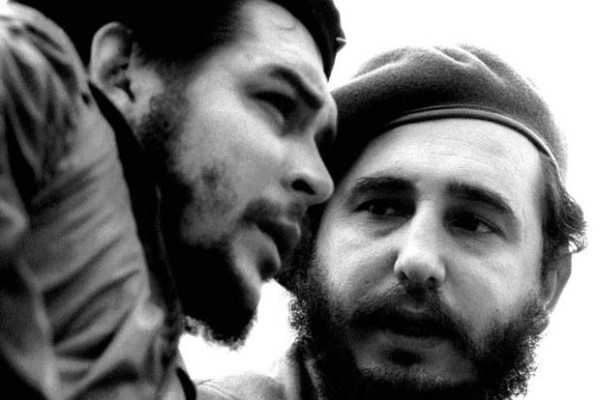
The man who bequeathed to posterity the phrase "Until victory, always," the heroic Argentine-Cuban guerrilla Ernesto Guevara de la Serna, Che Guevara, lives on in the inspiration and actions of the majority of the inhabitants of this country, ready to commemorate the 58th anniversary of his physical disappearance, which occurred after his assassination in Bolivia on October 9, 1967, on orders from the CIA.
The essence of this ellipsis in his ideology refers to the man of radical conduct and confidence in the power of fighting for a just cause who was always the one who “never spoke of death,” rather he saw it as something logical due to the dangers he ran, according to the testimony of Brigadier General Harry Villegas (Pombo), a very close collaborator at the time.
The Heroic Guerrilla fell fighting for the freedom and justice of the Bolivian people at the head of a guerrilla group composed of 17 fighters, in a remote spot known as Quebrada del Yuro, after facing an army detachment from that upper territory in a ratio of 100 men to one.
However, it is always pertinent to condemn the crime that took his life while he lay defenseless and wounded in the leg, a prisoner in a small school in La Quebrada, since the previous day while he was walking with the help of Bolivian Willy Cuba.
Before waging his final battle, Che Guevara and his comrades began fighting in the Andean nation with a force consisting of three platoons on November 7, 1966. During their journey, they engaged in 22 battles and also traveled through desolate moors, facing extreme hunger and extreme cold, with almost no cooperation.
A campaign of lies and disinformation, directed by the CIA and the Bolivian right, succeeded in isolating the liberating force, composed mostly of Bolivians and Cubans.
So many years after his passing, Che remains an essential figure for those who dream of a better world, one of freedom and equality, as well as for those who also uphold the banners of the left and Marxism. He is equally important for those fighting against the remnants of colonialism and the hegemony of the world's warmongering powers.
In today's Cuba, he is beloved for his contribution to the last liberation campaign, which he joined as a soldier on the Granma yacht expedition in 1956.
Upon his arrival as a doctor for the guerrilla force led by Fidel Castro, he quickly traded his medical bag for the rifle he had won and quickly became a military leader with the rank of Commander of the Rebel Army operating in the Sierra Maestra mountain range.
Later, in parallel with the troops led by Commander Camilo Cienfuegos, he led the decisive campaign from East to West in command of Column 2 Ciro Redondo, which, at the end of 1958, already in the central city of Santa Clara, fought the historic battle on the eve of the triumph of the Revolution.
Today, Santa Clara is considered the city of Che Guevara, who is fondly remembered, as is the native patriot Marta Abreu. The ashes of this Latin American hero are housed there in a mausoleum built in his honor and that of his comrades in combat.
We admire his talents as a soldier, a leader, a strategist, his example as a family man, his unconditional dedication to work and his efforts for the common good.
He is a paradigm when speaking of the humanism and simplicity of a revolutionary and his intransigence in the face of inconsistency, shoddy results, and a lack of sensitivity. He didn't tolerate inappropriate jokes, and he was adamant about this, because he himself didn't allow himself to communicate without directness or disrespect. He made every effort, even at the risk of his health, and he showed it. If it was up to him, nothing could be left undone.
And during his time leading Cuban government entities, he devoted himself fully to the precision and efficiency of the economy, which he considered key to the life of a country.
He studied extensively, in addition to medicine, and constantly encouraged young people to acquire knowledge for their own benefit and that of the nation they wanted to build.
These are some of the reasons for his influence. He didn't know it or imagine it, but a human being with such qualities, who always thought about helping others, fighting and working for the good of all, shouldn't even think about death, much less speak about it. His message was one of life and victory.
Photo: Korda
Taken from the Cuban News Agency (ACN)