Havana, Dec.— With a significant dose of love and gratitude, this December 22nd, roses, bouquets of flowers, postcards, and every form of human congratulation will once again fill the space wherever there is a teacher, an educator.
It has been common since that campaign which, to the rhythm of lanterns, primers, manuals, pencils, and great passion, made possible the literacy of thousands of people who until then did not know how to write even their own names on a sheet of paper.
It happens—and not many of us know—that at the end of the previous year (December 2, 1960), another experience was launched, no less strategic in terms of knowledge, education, and laying the foundations to build a radically new society: the Revolutionary Instruction System.
It was not enough that everyone knew how to read and write. It was also vital that those assuming leadership roles acquire increasingly solid preparation, due to the particularities of the moment and the challenges that in the future would shape the country’s internal life and the ideological and political aggressiveness of an enemy who would never forget the clean slap of history right across their face.
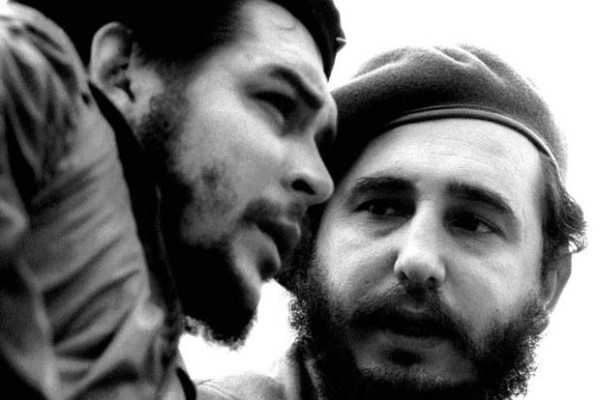
From the very beginning, Fidel and Che had warned about the need to properly train cadres.
But, returning to this December 22nd, it is worth asking ourselves if in every block, neighborhood, or community we have equal displays of gratitude toward the thousands of men and women who make up the Party’s network of schools, successors of that Revolutionary Instruction System that Fidel pulled out of the enemy's olive-green shirt sleeve.
There is the impression—hopefully false—that we do not always or everywhere keep present, to the same extent, those educators who also dedicate nights and early mornings to self-preparation on complex topics of national and international reality, to planning classes, conferences, and other activities conceived within a program that integrates contents from Theories of Leadership, Economics, History, International Relations, Sociology, Psychology, Political Communication... so that those who lead, regardless of sector or instance, do not do so “in the dark” or worse: “blindly.”
Leading is not improvisation; it is pure science. For this reason, the Party's schools (in provinces and municipalities), alongside the Ñico López [School], transformed into a University since 2023 according to State Council Decree-Law 72, ensure university education for undergraduate and postgraduate cadres, both political and from mass organizations and the State.
All this rests on the generally anonymous work of teachers, bachelors, masters, doctors, as pedagogical as those working in all other educational institutions or those universities from which thousands of professionals graduate every year.
It is impossible to overlook that these faculties have also been architects of the training received here by students from several sister countries.
I close with a beautiful and paradigmatic passage revealing the importance that Fidel always gave to general, comprehensive culture and the political preparation of those who made the Revolution, led it, and continue to hold its reins:
Isla de Pinos, Presidio Modelo, 1953. Idleness does not exist for the group of young people confined there after the Moncada events. Could it be that the books are also imprisoned? Reading feeds more than the plate of boiled food. The guard watching must think they are completely crazy. Unfortunate. Those books are as dangerous, or even more so, than the weapons with which those same “young men” launched themselves against the walls of the military fortress.
(Taken from Granma)