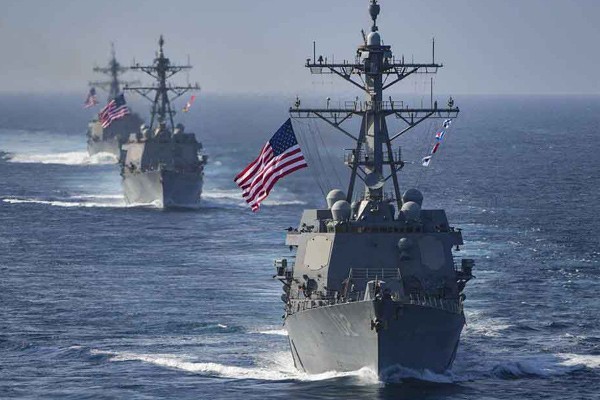
Madrid, Nov. 19 – Colombia today reiterated its rejection of the United States’ maneuvers in the Caribbean under the pretext of combating drug trafficking, and recalled that Latin America is a region of peace.
At the EFE Forum at Casa de América in Madrid, Colombia’s Foreign Minister, Rosa Yolanda Villavicencio, said these are excessive actions that endanger Latin American peoples, especially those in the Caribbean.
"It's an interventionist-type escalation that could represent a covert action against Venezuela, which would bring many problems, including the massive emigration of Venezuelans to Colombia," the diplomat pointed out.
Responding to questions from Prensa Latina, she considered that the potential call by María Corina Machado for US intervention in Venezuela "has little to comment on." “When a Nobel Peace Prize winner invites greater aggression, there is nothing to say,” she concluded.
Regarding whether she deserved the award, she said “perhaps other people had more merit for it,” but it is a decision made in Norway that she does not question.
She also referred to the failed Summit of the Americas that was supposed to be held in the Dominican Republic and to which Mexico, Colombia, and Chile clearly expressed their intention not to attend due to the exclusions demanded by Washington.
Regarding Hurricane Melissa, in response to another question from Prensa Latina, the Colombian minister indicated that it caused tremendous destruction, confirming the Caribbean’s fragility in the face of climate change.
“Our country sent aid to Jamaica and Cuba, the most affected, and also to Haiti,” she added.
On another note, the head of Colombian diplomacy stated that although there are contacts with the Chargé d’Affaires of the US Embassy in Bogotá, these are mostly limited to existing military cooperation and some issues related to the return of immigrants to the coffee-producing country expelled by Washington.
She also referred to the unjust inclusion of President Gustavo Petro on the so-called Clinton List by the Office of Foreign Assets Control (OFAC).
“The inclusion of the president and his family on the Clinton List is quite unfair; it’s like a punishment to Colombia headed by the president, who is the head of state and the legitimate president of our country,” Villavicencio denounced.
Last October, the US accused Petro of being a “drug trafficking leader,” and also included on the list his wife, Verónica Alcocer; his son Nicolás Petro; and the Colombian Interior Minister, Armando Benedetti.
Commenting on the current political landscape in Latin America and its shift to the right in Bolivia, as well as the possibility in Chile, she noted that in any case there prevails a climate of unity in the region through CELAC, even above ideological viewpoints.
In parallel, Spain’s Foreign Minister, José Manuel Albares, renewed the Framework Agreement for Sustainable Development for the next five years with Colombia after meeting with Rosa Yolanda Villavicencio.
The document will allow continued work on shared priorities such as gender equality, institutional strengthening, and climate change, among others.
According to official sources, both ministers signed the declaration of the High-Level Commission between the two countries, which encompasses various aspects of the bilateral relationship in areas such as legal and consular cooperation, cultural and educational matters, science and technology, economic and commercial affairs, and politics.
Additionally, they addressed issues such as the fight against drug trafficking and organized crime, security, and the recognition of degrees.
Spain and Colombia have built strong bilateral ties that have brought us together and made Colombia a strategic partner for Spain in Ibero-America today, Albares emphasized.