There are days when a mere brush in a crowded bus can lead to a slap, or an argument in line for bread can turn words into fists.
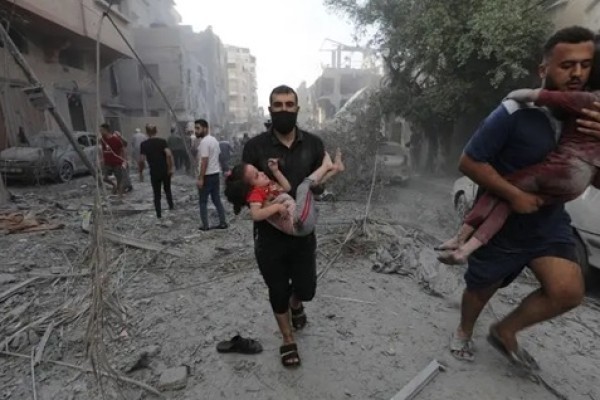
Violence hides in the everyday, disguised as shouts that wound more than blows, silences that marginalize, and threats that paralyze.
A child dragged down the street by their mother’s impatience, a woman harassed at her workplace, a rude response from a customer service representative, an elderly person who fears going out due to assaults… these are different faces of the same problem that crosses cultures, classes, and geographies.
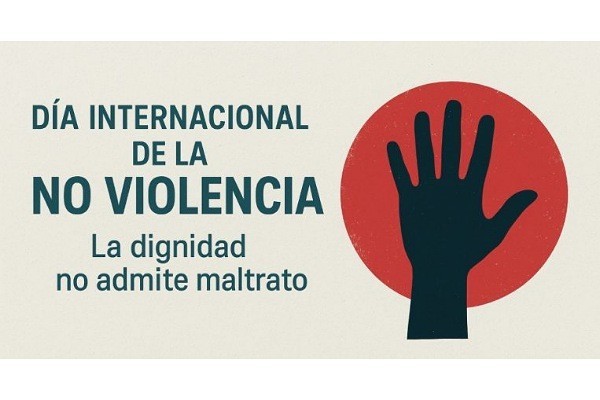
That is why every October 2nd, the world commemorates the International Day of Non-Violence, proclaimed by the United Nations General Assembly in 2007, in honor of the birth of Mahatma Gandhi, a universal symbol of peaceful resistance.
This date is not merely a reminder but a collective commitment: to promote tolerance, dialogue, and a culture of peace in the face of a phenomenon that threatens human dignity.
Violence does not always strike visibly.It can be the intentional use of force or the abuse of power to subjugate, control, or impose something on another person. Its expressions are multiple: physical, psychological, sexual, economic, symbolic.
Gender-based violence, domestic violence, structural violence, and digital violence are also recognized, all sharing a common denominator: they fracture coexistence and reproduce inequalities.
What is happening in our country?
In recent years, social media has increasingly exposed cases of murders, assaults, mistreatment, and other types of violence in Cuba.
According to data shared at the VII Plenary of the Central Committee of the PCC, in 2023 about 9,579 family units were in situations of violence, affecting 16,116 women and girls.Among women over 15 years old suffering from this scourge, 60% were Black or mixed-race, most under 35 years old and with an average education level of ninth grade.
The figures are even more heartbreaking when discussing extreme violence: by the end of October 2023, there were 117 recorded cases of violent deaths of women in the country, leaving 70 children and adolescents motherless.Most cases occurred in homes shared by couples, revealing the persistence of cultural and relational patterns that normalize subordination and abuse.
The Cuban Penal Code legally addresses this situation by defining 36 criminal offenses related to violence, with penalties ranging from imprisonment to life sentences, depending on the severity of the acts.Crimes such as murder, assault, workplace harassment, sexual abuse, robbery with violence, coercion, or threats are included.
The law also provides additional protective measures for victims, such as restraining orders or suspension of parental responsibility in cases of domestic violence.
Prior to the Code, the Criminal Procedure Law expanded guarantees for victims by allowing them to be represented by a lawyer of their choice and to participate as a party in the criminal process.
However, violence cannot be fought solely with penalties.It also requires education, prevention, and culture. This underscores the importance of initiatives like the National Program for the Advancement of Women (PAM), which promotes strategies for cultural transformation, community workshops, communication campaigns, and institutional protocols.
Spaces such as Orange Days or the "Voices of Women for Non-Violence" gatherings have become platforms to raise awareness about the problem and mobilize society.
However, challenges persist. The prevalence of macho cultural patterns, the impact of the economic crisis on daily life, and the reproduction of stereotypes in public and private spaces continue to fuel various forms of violence.
Transforming these realities requires time, political will, and, above all, a collective commitment that places victims at the center of any action.
On the International Day of Non-Violence, Cuba takes on this challenge from its concrete reality. As Martí wrote, “the first law of our Republic must be the worship of Cubans for the full dignity of man.” And dignity does not tolerate blows, shouts, or complicit silences.