Lima, Apr. 20.- Pressures on Peruvian President José María Balcázar to desist from leaving the purchase of United States fighter jets to the next administration intensified today, as questioning of the acquisition persists.
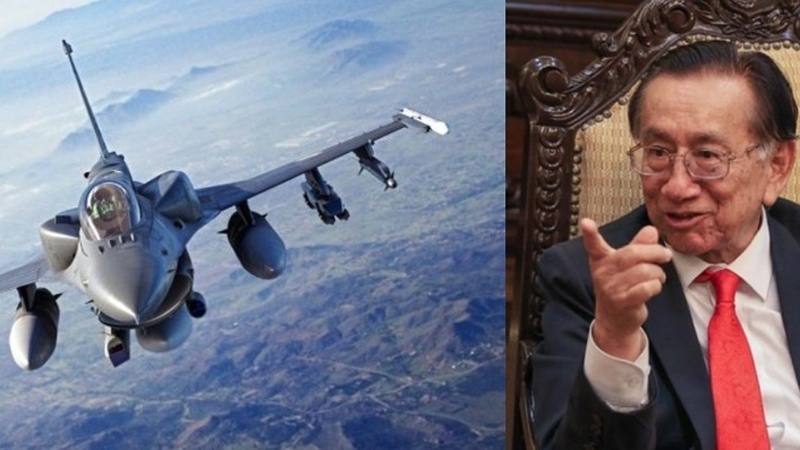
At the same time, the United States Ambassador, Bernardo Navarro, visited Prime Minister Luis Arroyo, who also received Foreign Minister Hugo de Zela and Defense Minister Carlos Díaz, all of whom are in favor of the acquisition of 12 F-16 Block 70 aircraft for three billion 420 million dollars.
A group of former high-ranking Armed Forces officers and Defense Ministers signed a document arguing that the purchase was a decision made years ago.
The document maintains that Balcázar's intention—that a matter of such importance transcends his status as interim president and must be decided by the upcoming elected leader—"negatively impacts the international credibility of Peru."
In particular, it alleges the effect this has "on the relationship with strategic allies such as the United States of America, with whom defense and security cooperation ties are maintained."
Additionally, the winner of the first round of the presidential election, Keiko Fujimori, and the President of Congress, Fernando Rospigliosi, stated that President Balcázar must respect the commitments of the Peruvian State and ratify the F-16 purchase contract.
“We hope Mr. Balcázar reconsiders,” the latter asserted, because these are important decisions, while Rospigliosi—from the neoliberal Fuerza Popular party led by Fujimori—agreed with her on the argument that a formal commitment is at stake.
“Failure to comply could bring very serious consequences for the country and perhaps trigger a government crisis,” which may allude to the Parliament's power over the Executive. None of those mentioned referred to the insinuation by Ambassador Navarro, that Balcázar's position was equivalent to “negotiating in bad faith and that as a representative of the Trump administration, I will use all available tools to protect and promote the prosperity and security of our country and the region.”
The one who did react to this was centrist presidential candidate Jorge Nieto, a former Defense Minister, who commented that Navarro's statement is blackmail and questioned the Foreign Ministry's silence regarding the diplomat's remarks.
Regarding this, President Balcázar stated that Navarro's statements were neither appropriate nor respectful and suggested that the latter “may be ill-informed.”
“What I do not want is to reach that level of discussion. I am representing Peru, I am the President of the Republic; I cannot discuss, clarify, or question what this gentleman may declare,” he added.
He explained that postponing the contract “does not imply any danger to the bilateral relationship,” and that the projected purchase must be decided by a government strengthened by the popular will, noting that Peru has other priorities, such as access to basic services and addressing urgent social needs.
“I understand that (Navarro) wants to sell planes, but what is the point of buying F-16s when neighbors train in F-35s?” said Nieto, who a few days ago warned Balcázar not to sign the purchase, because it is not his responsibility but rather that of the next government, which “I hope has an attitude in defense of Peruvian interests.”
Regarding other fighter jet proposals presented, Nieto noted that “the Swedish one was good, the French one was not bad, but any of them would suit us better” than the American F-16s.