

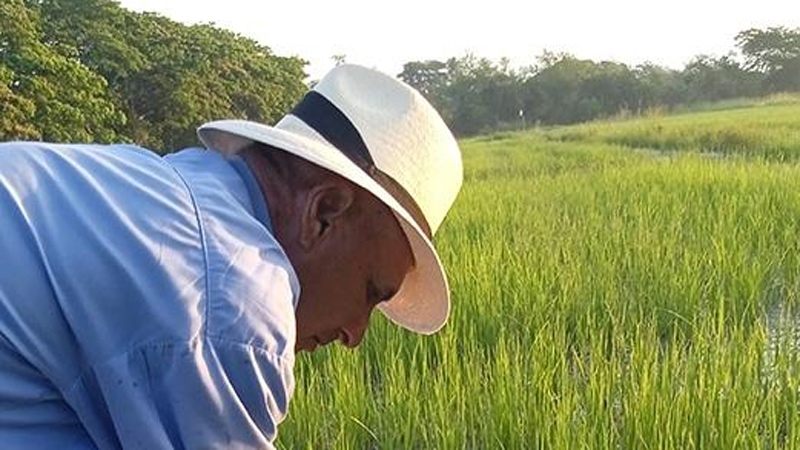
Agriculture in the province will plant no fewer than 400 hectares of rice this year, it was revealed in meetings held by Yoel Pérez García, the first secretary of the Party in the province, with producers of this vital food.
The highest political leader in the area exchanged views with farmers dedicated to cultivating the grain in the zones of La Jabilla, Caimanera, and Paraguay; along with Arroyo Hondo among the most committed to planting the sought-after grain, rich in carbohydrates and free of cholesterol.
The frankness of the dialogue, together with the guaranteed government support to farmers with fuel for land preparation, led most of the farmers to commit to expanding their planting areas and in many cases to multiplying them.
This response expresses the rice growers' willingness to produce as much as possible at a time when this and other products are in short supply, and the United States government threatens Cuba with a naval blockade.
The planned plantings would be the largest in the history of the province, and their harvests would be primarily destined for student centers, health institutions, and others under the so-called social consumption, reported José Saiz Machado, head of the Agricultural Department in the territorial Delegation of Agriculture.
In addition to the municipalities of Guantánamo and Caimanera (those with the largest planned plantings), Baracoa, Manuel Tames, and Niceto Pérez also participate in the rice program; as do Azcuba, the Fish Hatchery Center, and the Youth Labor Army.
Water, an element that has historically hampered rice planting in Guantánamo, now exists in abundance, especially in the plains, and what is required is to use it well so that it is sustainable and productive.
Problems from previous years found solutions in these meetings, which resulted in the farmers' commitment to plant at least 400 hectares in 2026.


