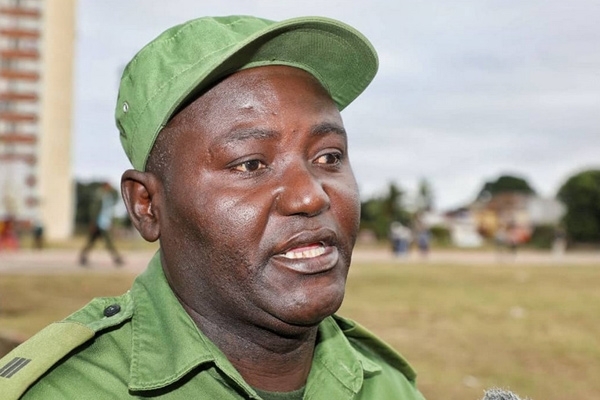
Camagüey.- Yohandris Varona Torres saw the photos of the 32 Cubans who fell in Venezuela last January 3rd and couldn’t help but get emotional. He did so this morning during the tribute held in the Nicolás Guillén Protocol Hall in Camagüey. It wasn’t the first time he looked at them. These weren’t strangers in the pictures. They were his comrades. And we know that death becomes more real when it strikes close to your family, friends, and team.
He spoke little. Perhaps he couldn’t find the words. Only enough to help us understand the pain. All in less than five minutes. He walked upright but still carried in his eyes a sadness hard to explain. Coming from Vertientes in Camagüey, he had been working as personal security in Venezuela for two months and six days when the attack happened—the most intense experience in 23 years of military service, right on his first international mission.
“We fought there against the planes that were strafing us. Even though our weapons were smaller, we never stopped fighting; we confronted them. I have my training and I know how to fight, but they outnumbered us. At that moment, my only thought was to keep battling. You had to shoot, and I started doing exactly that.
“That night, I had started my guard duty at midnight and was to be on for six hours. The attack was at approximately 2:00 a.m. It was early dawn. Everything was dark. If a helicopter is coming right at you, the only thing you can do is shoot back and defend yourself. That’s what we did. We kept firing until the last moment.”
Yohandris, with an ‘h’ in the middle as he corrected us, was there that night, in the very place where his comrades, those from all over Cuba, fell. This good Cuban carried them all, and today I can only imagine the weight he bore and still carries—the weight of death, pain, helplessness, and injustice.
“Our comrades are a glory for all of Cuba. They were my brothers. They were working with me. I saw them all fall and I carried them all. There was no help from anyone for that, but no body was left on the field. We preserved them in one of our dormitories. I can’t explain the pain. But at least no one was left in Venezuela. Here they are, in our Homeland.
“My country will always have my willingness to confront the enemy wherever necessary. That’s what the Commander taught us. And the death of my comrades cannot be in vain.”
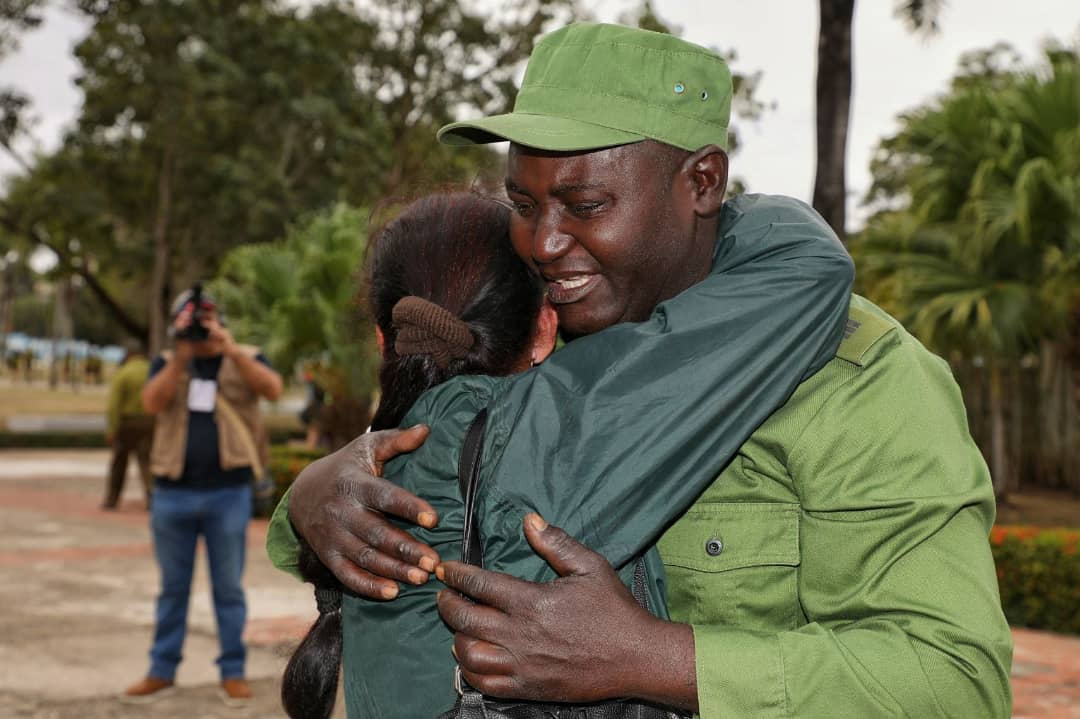
The pain is inside. Just above the stomach. He doesn’t have to tell me. I know. Noble men feel it that way. There, a little higher, in the throat, impotence, rage towards those who believe they have the right and the power to take the lives of good people, not knowing what to say, the shame of carrying in their arms the weight of unjust death.