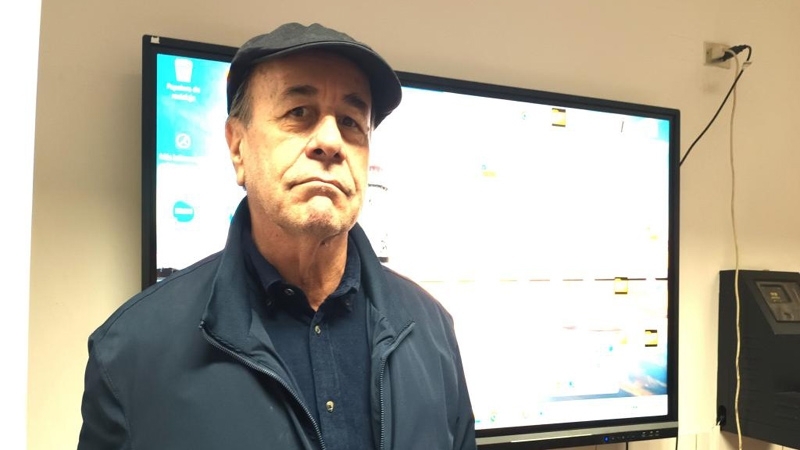
Santiago de Chile, March 24 – The renowned Chilean lawyer Carlos Margotta described as an international crime the economic, commercial, and financial siege currently maintained by the United States against Cuba, which has worsened with an oil blockade.
In an interview granted to Prensa Latina, the Director of International Relations of the Chilean Human Rights Commission (CChDH) recalled that unilateral coercive measures are considered a crime against humanity.
This is due, he said, to their devastating effects on peoples, particularly regarding the exercise of basic rights such as the right to life and food.
“Today we are facing an offensive by the United States that, under Donald Trump's administration, not only attacked Venezuela but also imposed this energy blockade on Cuba that affects millions of men, women, older adults, children, and pregnant women, who suffer this international crime,” he stated.
The lawyer considered that it is the obligation of peoples and humanitarian organizations to defend Cuba.
He, who is also a member of the Chile Chapter of the Network of Artists, Intellectuals, and Social Organizations in Defense of Humanity, warned about the revival of the Monroe Doctrine, which seeks to revert the peoples of America to mere colonies.
Yesterday it was against Venezuela, today it is against Cuba, and tomorrow it will be against anyone who wants to defend their sovereignty and independence, he warned.
Later in his interview, Carlos Margotta referred to the need to carry out a profound reform of the United Nations in order for it to fulfill the purposes for which it was created after World War II.
“Unfortunately, this international system has shown its ineffectiveness, as evidenced in Gaza,” he said.
He affirmed that currently there is no international protection system that truly fulfills its purpose of safeguarding peace, sovereignty, and independence of peoples.
The lawyer was also asked about the candidacies to replace the UN Secretary-General next year, a position for which several Latin Americans are aspiring, including former Chilean President Michelle Bachelet.
“Today, whoever holds the position is not the most relevant thing, but to modify the Security Council, the entire structure, so that what is agreed upon there can be effectively enforced, and that has not been happening for many years,” he concluded.