Camagüey, March 2nd - In Cuba, applied science today drives advances in sustainable food production, with results in Camagüey that integrate technological innovation, energy efficiency, and reduction of environmental impacts as strategic pillars of agri-food development.
The Ministry of Science, Technology and Environment in Camagüey presented progress of the Territorial Program of Science, Technology and Innovation (PTCTI), aimed at strengthening the production chain and increasing agricultural yields through contextualized scientific solutions.
One of the highlighted projects is PT223CM002-002, based on Biofloc technology with probiotics to improve the quality of shrimp postlarvae, an alternative that optimizes resources and reduces environmental impacts in aquaculture systems.
The application of this technology allowed a 50 percent reduction in the use of commercial feed, with direct economic advantages and a significant reduction in operating costs associated with energy consumption.
According to official data, the implementation generated an annual saving of 500,000 Cuban pesos in electricity, equivalent to 4,167 U.S. dollars, strengthening the financial sustainability of production units.
The environmental impact is also notable: the reduction of the carbon footprint reaches 132 tons of CO2 annually, a figure comparable to the savings of 300 barrels of oil, an indicator that demonstrates the scientific contribution to climate change mitigation.
Likewise, the system reduces the need for constant water treatment in large-volume larval tanks, implying lower expenses and greater stability in aquaculture production processes.
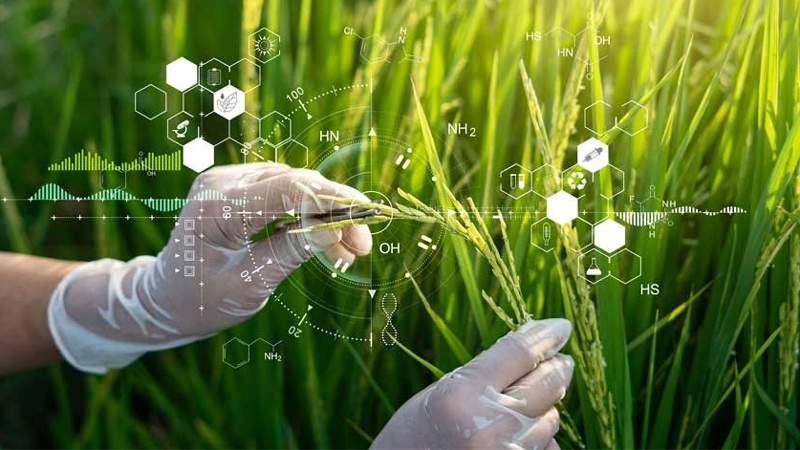
In the agricultural field, the project PT223CM002-003 promotes integrated fertilization management in four varieties of rice, adapted to different edaphoclimatic conditions of the province of Camagüey.
The application of liquid organomineral fertilizers via foliar spraying increased average yields by three tons per hectare compared to the baseline, a result that directly impacts territorial food security.
To date, 29,574 liters of FERTOMIL have been produced and marketed for an amount exceeding 946,000 Cuban pesos, evidence of the potential of science in Cuba as a stronghold of sustainable development with an international outlook.