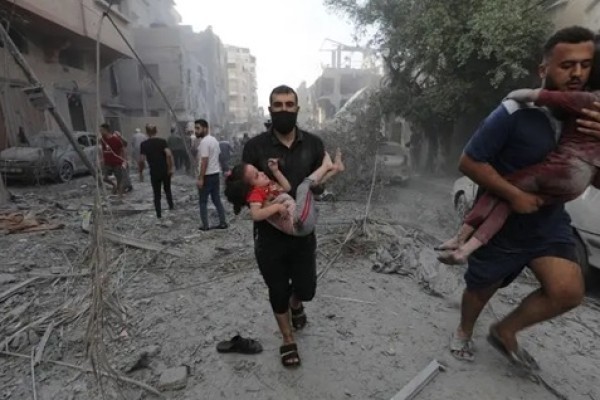
The news hit like a projectile at dawn: the year had barely begun, and the land of Bolívar was stained with blood. About one hundred lives were extinguished on January 3, 2026, in the Venezuela that Hugo Rafael Chávez Frías loved so much, as a result of the vile imperial bombing and the actions following the kidnapping of the constitutional president Nicolás Maduro. That day, from the largest of the Antilles, 32 sons fell in an uneven battle.
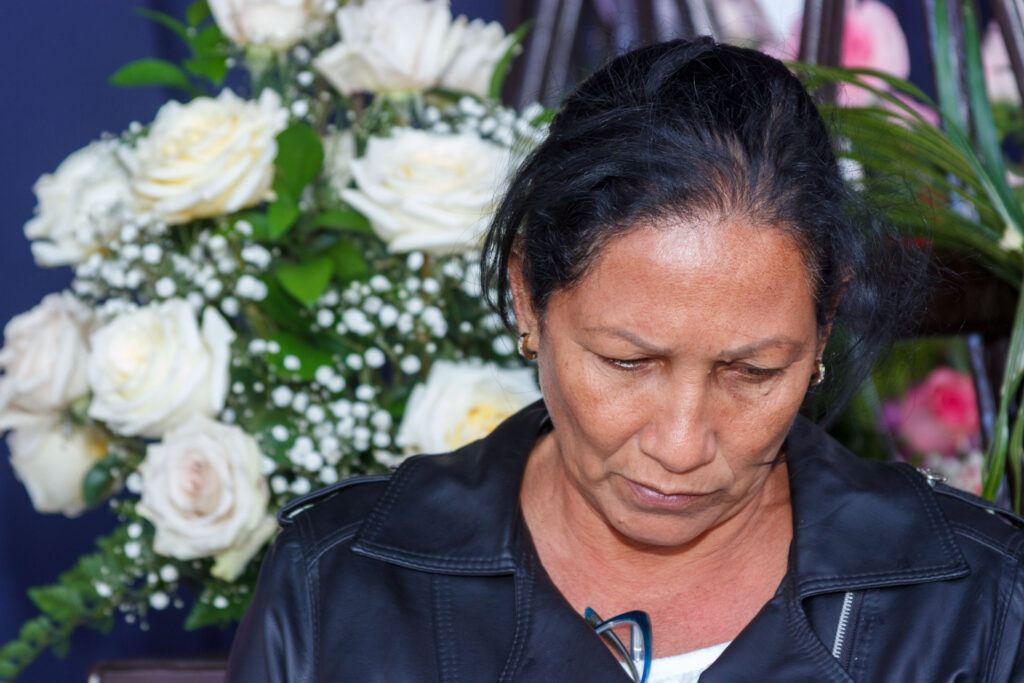
Marvelys Sánchez López still struggles to come to terms with the fact that her beloved and only brother is no longer there. She searches for him in her memories and finds him—both charismatic and cheerful, playing DJ at some of the family parties he so enjoyed, and also bringing a bit more order and seriousness to household chores. "I used to tell him: brother, the military regime is for unity, not for the house. The truth is he was very clean, organized, but above all responsible," she recalls.
Born in Contramestre, in eastern Cuba, and with roots in the Matanzas municipality of Jagüey Grande, Colonel Orlando Osoria López was 49 years old when bursts of hatred cut his life short on Venezuelan soil while he was fulfilling his duty as personal defense. The injustice of his premature passing deeply affects the souls of all who knew him and refuse to accept his absence.
“Of noble character, the kind of person who did not live for himself but for others. He was always a leader because he had a vast and comprehensive culture; he could speak about anything, on any topic. When he was given a responsibility, he created an atmosphere of great friendship and solidarity. The comrades from the troops created a WhatsApp group, and I have learned so many wonderful things...”
Her voice breaks again, but not just from pain; the emotion wavers because he is her hero and she knows herself to be his reflection—the example to follow. “I graduated with the rank of captain in the Revolutionary Armed Forces. I was the one who led him on that path,” she asserts, although the son of Baire also carries in his veins the bravery of his father, Orlando Osoria Pompa, an officer in the Rebel Army who fought on the shores of Playa Girón.
That is why Orlandito’s composure is not surprising; he studied at the Special Troops Cadet School of the FAR, where he specialized in Tactical Command. Since joining the Directorate of Personal Security, he stood out for his discipline, political-ideological preparation, and the responsibility his sister often speaks about, being an example in every aspect.
He carried out each mission professionally, ensuring the physical safety of the country’s leading officials. Nor are the awards for Distinguished Service, Production and Defense, or the badges received after years of service and the commemorative ones for the 60th anniversary of the FAR and the Ministry of the Interior surprising.
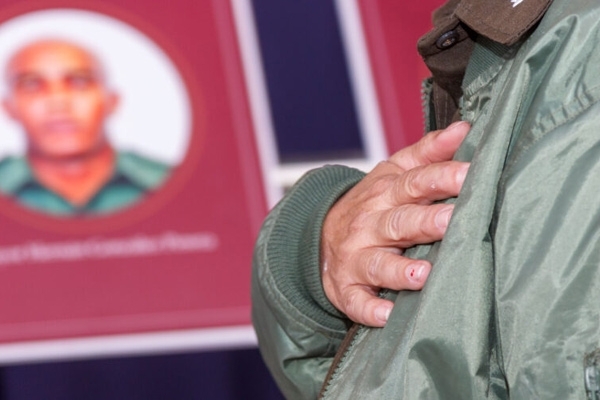
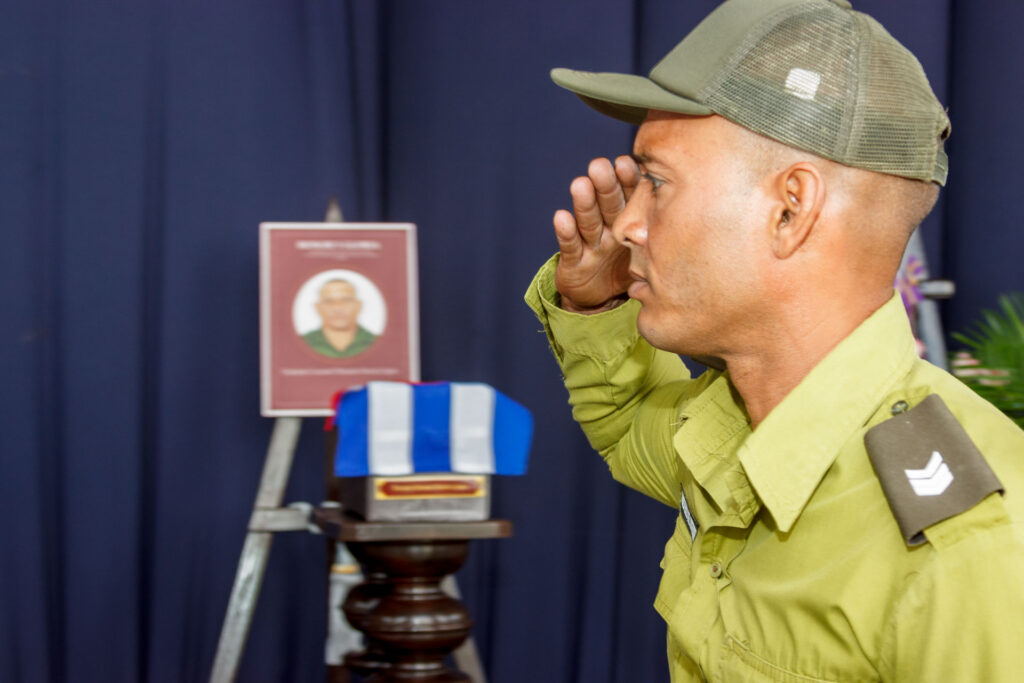
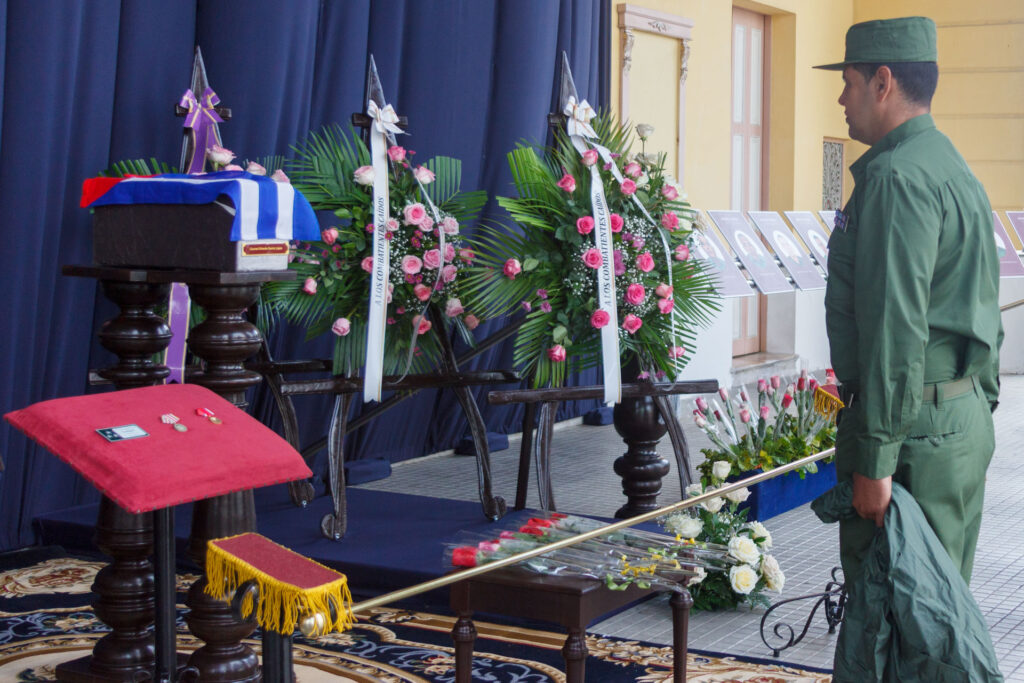
Marvelys’s face remains furrowed, and her eyes are constantly moist as she delves into the recesses of her mind. A few meters away lie the mortal remains of her beloved Orlando, covered by the flag of the Lone Star. Nearby, two medals accompany him, while a people gather to give him their final farewell.
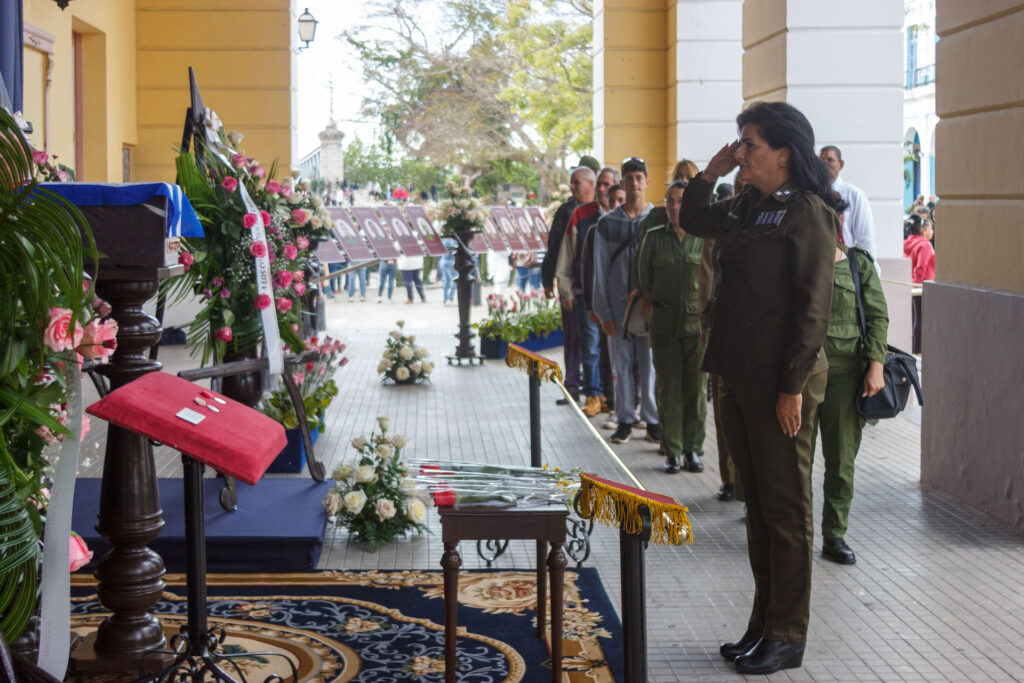
In front of the image of the hero and his 31 comrades in struggle parades a sea of olive-green uniforms, white coats, Party and Government leaders, students, workers, housewives... all gathered at Plaza de la Vigía to pay the deserved tribute.
There are flowers, tears, military salutes, hands that clasp tightly, encouraging pats on the back, solemnity, looks and silences that speak volumes. The heroism and sacrifice of the sons of the Homeland are appreciated, though the barbarity remains hard to understand.
He was the leader of the first ring security group. Ahead of him were the first two colonels, one of whom was the mission chief, Humberto Alfonso Roca Sánchez, for whom he felt great admiration," Marvely recalls, as the lump returns to her throat, the tear held back with effort, and the memory pierces through the armor of love.
"There was a moment when I couldn’t understand the reality, what was happening, and I suffered a lot because my brother didn’t sleep. As you hear: during his mission, he didn’t sleep while fulfilling his duty. And I became very sad when I thought they had taken him, and I could do nothing, unable to defend him.
"I know that the whole truth is still not known and that one day it will be; but I know for sure that Orlando fought like he was: a brave man, a coj… as it’s said in good Cuban slang, and that is what encourages me to carry on."
The pain after the loss leads to an inevitable journey back in time, and those April days return—the bombings of the Ciudad Libertad and San Antonio de los Baños airports, Girón and its militia, but also the wound left by the horrendous crime in Barbados.
I was overwhelmed with pride when I saw Army General Raúl Castro beside the mortal remains of Humberto and my brother. It hurts, it hurts deeply in the soul… but I feel proud of him – and then she recalls the anecdote her mother told about that visit to the viewing, when Orlando asked their mother to understand his choice and his destiny: I dream of one day being among the greats, and that depends only on my sacrifice.
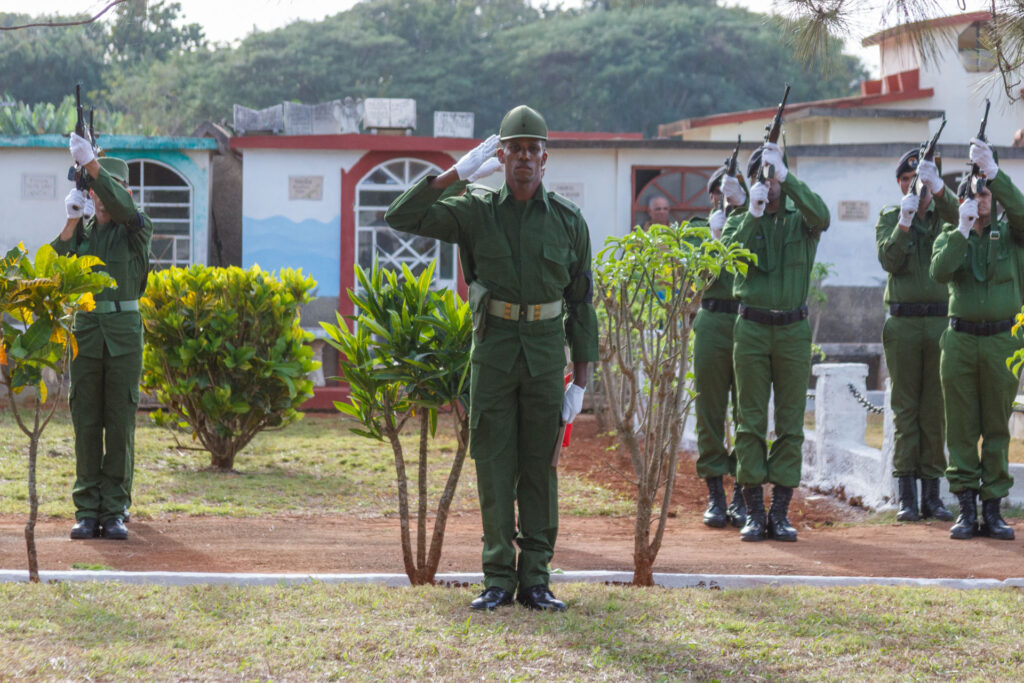
The pantheon of those fallen in defense, in the cemetery of their beloved Jagüey, safeguards the remains of the colonel, the combatant who carried within him the conviction to serve his country, even from other trenches.
And while the pain from the loss runs deep, Marvelys is satisfied that her brother Orlando fulfilled his dream of becoming a hero just like their father, of giving everything for the causes he considered just, of immortalizing himself in the history of the Caribbean island as one of the greats. "He died as he wished, defending what he loved so much."