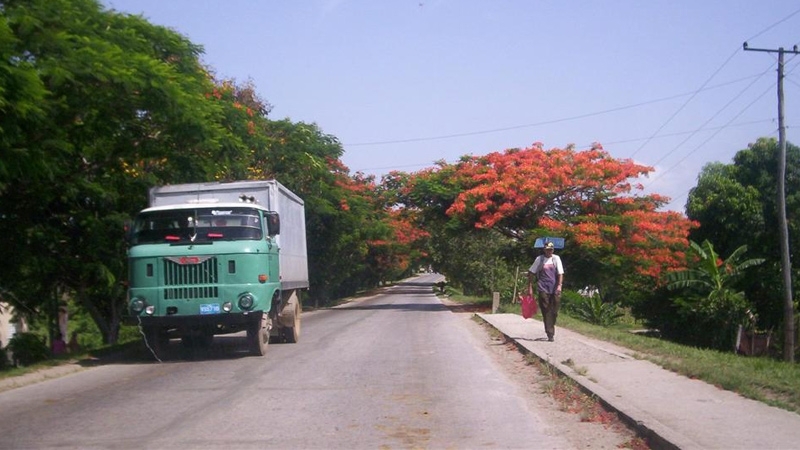
Feb, 2026.- The Central Highway of Cuba began construction on May 2, 1927, and was inaugurated on February 24, 1931. Its construction was organized in sections, including the one connecting Martí with the Jobabo River, identified as section 24 within division 5 corresponding to the province of Camagüey. This division was under the direction of the Camagüey engineer Francisco Salas Bobadilla, who graduated in New York in 1905 and had extensive experience in infrastructure projects.
The design and execution of section 24, which passed through Guáimaro after leaving Martí, was awarded through a competition to engineer Ledón Uribe, who received 8,500 pesos for the project. He is credited with the Martí overpass, conceived to avoid a level crossing with the central railroad, as well as the bridges and culverts connecting Martí with the Jobabo River, including the structures over this tributary and over the Guáimaro River, the two most imposing of the section.
The highway largely followed the route of the old Royal Road of Havana, although upon reaching Guáimaro, it veered southeast, rendering the iron bridge practically obsolete. In addition to the main road, the work included signage, among them the Capellanía stone kilometer markers, rectangular and topped by a semi-cylinder, always placed on the right side heading east. In the Martí–Jobabo stretch, 24 of these markers were installed.
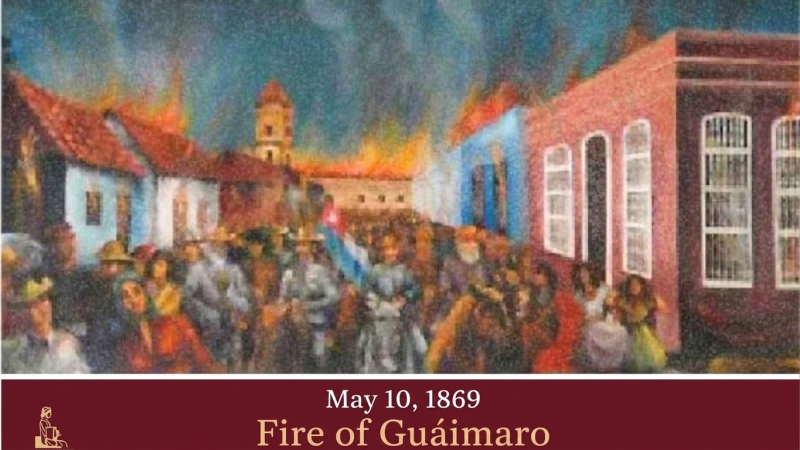
The Central Highway transformed the face of Martí, extending the town to El Faro, and in Guáimaro gave new dynamism to daily life, generating architectural changes of notable environmental value. For nine decades, this road has been the main artery that enlivens daily life in Guáimaro.
(Photo taken from the Internet)
_large_large_large.jpg)